
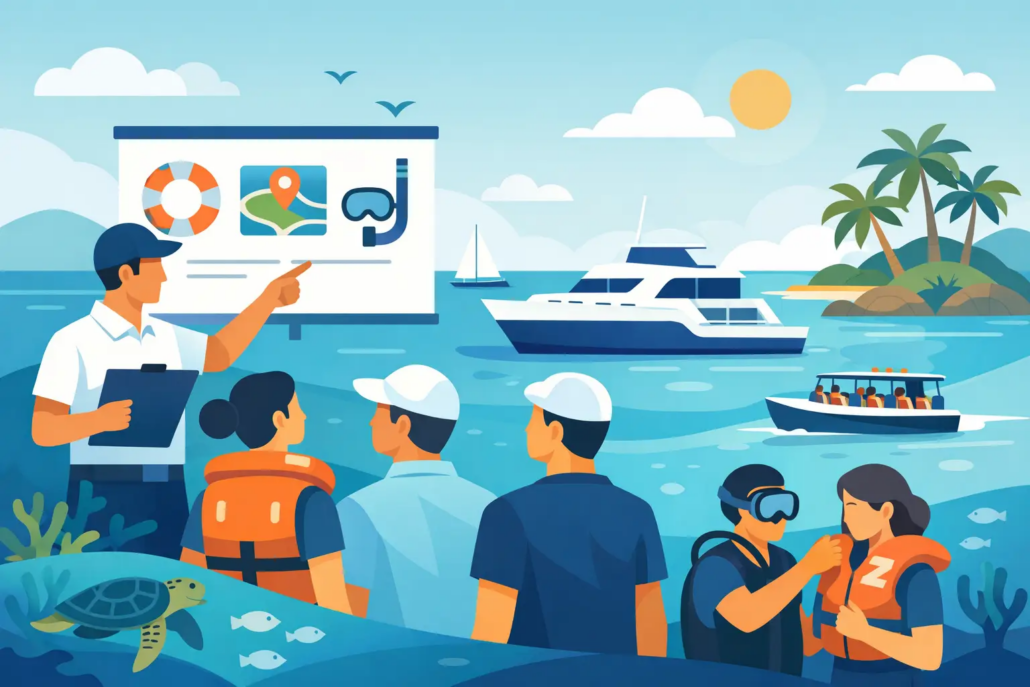
Marine Tourism Training for Safer Caribbean Crews
A guest’s Caribbean boat day may look effortless: a confident welcome at the dock, cold drinks stowed securely, a smooth departure, and a crew that knows exactly when weather, sea state, or guest ability calls for a change of plan. That standard does not happen by chance. Marine tourism training gives skippers, deckhands, watersports teams, and tour operators the practical skills to run safer, more professional experiences on the water.
For tourism businesses, training is not only about compliance. It shapes the guest experience, protects your reputation, and gives crew members a clear route to greater responsibility. For individuals, it can be the bridge between enjoying time on boats and building a credible career in charter, watersports, transport, or yacht operations.
What Marine Tourism Training Should Cover
Marine tourism covers a wide range of operations, from sailing charters and powerboat excursions to dive transfers, beach shuttles, watersports centers, and day trips. The exact training requirement depends on the vessel, passenger capacity, operating area, and local regulations. Still, strong programs share a common purpose: developing crews who can make sound decisions while looking after people.
A capable crew needs more than boat-handling ability. They must communicate clearly with guests who may be nervous, tired, unfamiliar with the sea, or unable to swim confidently. They need to prepare a vessel before departure, conduct a briefing people will actually understand, monitor conditions throughout the trip, and respond calmly when a plan changes.
The core areas normally include seamanship, navigation, collision regulations, weather awareness, passenger management, emergency response, radio procedure, and practical safety equipment use. Depending on the operation, training may also include tender handling, snorkeling and watersports supervision, environmental practices, security awareness, and local route knowledge.
That breadth matters. A skipper can execute a perfect docking maneuver and still deliver a poor trip if guests receive no safety briefing, the crew cannot spot heat stress early, or the itinerary ignores changing wind and swell.
Why Guest-Facing Crews Need More Than a License
A license demonstrates a defined level of competence. It is valuable and, in many commercial roles, essential. But a tourism operation also relies on judgment, hospitality, and consistency from every person on board.
Consider a typical charter departure. Before the lines come off, someone should check that safety equipment is accessible, the passenger count is correct, loose gear is secured, the route suits the forecast, and guests know where to sit, how to move safely, and what to do if they feel unwell. During the day, the crew must balance the schedule against real conditions. The best decision may be to skip an exposed snorkeling stop, return earlier, or choose a quieter anchorage.
These decisions are rarely dramatic. That is the point. Good marine tourism training creates crews who recognize small risks before they become incidents, while keeping guests informed and comfortable rather than alarmed.
It also improves the commercial side of an operation. Guests remember crews who are organized, approachable, and knowledgeable about the coastline. They are more likely to recommend a business when the experience feels relaxed because the crew is clearly in control.
Build Training Around Your Operation
There is no single course package that suits every marine tourism business. A sailing school, a resort watersports team, and a crew running inter-island passenger transfers face different operating risks. Training should start with an honest look at the work being done, not with a generic certificate list.
For charter and sailing crews
Sailing and charter teams need practical competence in passage planning, sail handling, close-quarters maneuvering, anchoring, man-overboard recovery, and onboard leadership. RYA practical courses can provide a structured progression from competent crew through skipper and Yachtmaster-level development. Theory training supports this with navigation, tidal planning, chart work, and collision regulations.
For crew working commercially, relevant MCA and STCW basic safety and security training may also be required or strongly expected, depending on the vessel and role. These courses build essential emergency awareness and provide credentials recognized across much of the professional marine industry.
For powerboat, transfer, and excursion operators
Powerboat crews require confident low-speed control, safe passenger loading, route planning, lookout discipline, and an understanding of the conditions that can make a short crossing uncomfortable or unsafe. A fast boat does not reduce the need for preparation. In fact, higher speeds, exposed passengers, and busy anchorages make sound decision-making even more important.
Training should include practical scenarios relevant to the operation, such as recovering a person from the water, handling an engine issue away from shore, managing a sudden squall, and communicating with a guest who needs medical assistance. Radio competence and clear escalation procedures are particularly valuable when multiple boats and shore staff work together.
For watersports and resort teams
Watersports staff are often the first crew members guests meet. They must combine an upbeat, welcoming manner with careful supervision. Their responsibilities may include fitting buoyancy aids, setting boundaries, assessing a guest’s confidence, explaining equipment, and recognizing when conditions are unsuitable for a particular activity.
A team that is trained only to issue equipment can create avoidable risk. A team trained to assess, brief, supervise, and respond gives guests greater confidence and protects the business. Bespoke training is often useful here because it can reflect the specific equipment, beach layout, rescue craft, guest profile, and operating procedures of the site.
Credentials Matter, But Practical Repetition Matters Too
Recognized qualifications give employers and clients confidence that a crew member has met an established standard. RYA, MCA, STCW, Caribbean Boatmaster, and regional licensing pathways each have a role, depending on where and how you operate. The right route may support a first job, a promotion to skipper, commercial work, or legal authority to run a vessel.
However, certification should not be treated as the finish line. Skills fade when they are not practiced. A crew that completed safety training years ago but has never rehearsed its current vessel’s emergency procedures may be less prepared than a newer crew that trains regularly.
Operators should schedule practical refreshers around real scenarios. Run man-overboard drills, review fire and abandon-ship equipment, practice radio calls, and talk through how the crew would handle a guest injury at an anchorage. Keep the exercises proportionate and professional. The objective is not to create anxiety, but to ensure people know their role before pressure arrives.
The Caribbean Advantage: Conditions That Teach Real Seamanship
The Caribbean is an exceptional place to learn because the rewards and responsibilities of seamanship are visible every day. Trade winds, open-water passages, reefs, busy anchorages, squalls, and changing sea states create meaningful practical lessons without losing the appeal of warm water and remarkable cruising grounds.
Antigua is especially well suited to crew development. Its active yachting culture, varied coastline, and regatta heritage offer a serious training environment alongside the energy that brings people to sail in the first place. Training aboard a working vessel, rather than only in a classroom, helps crews connect navigation, weather, boat handling, and guest care to the decisions they will make on the job.
Ondeck Sailing works with both individual sailors and marine businesses that need off-the-shelf or bespoke training packages. That distinction is useful. An aspiring skipper may need a clear qualification pathway, while a tourism operator may need the whole team to perform better together under its own operating procedures.
Choosing the Right Next Step
Start with the role you want to perform or the service you need to deliver. If you are new to boating, focus first on practical seamanship and safety fundamentals. If you already work on the water, identify the credentials required for your next position, then add the theory and safety training that supports them. If you manage a business, review the moments where your team faces the most pressure: departures, guest briefings, changing weather, equipment handovers, or emergency response.
The strongest training plan is progressive. It combines formal qualifications with time on the water, feedback from experienced instructors, and regular practice in the conditions where you operate. A polished Caribbean experience begins well before the first guest steps aboard, with a crew prepared to make every mile feel confident, capable, and memorable.

