
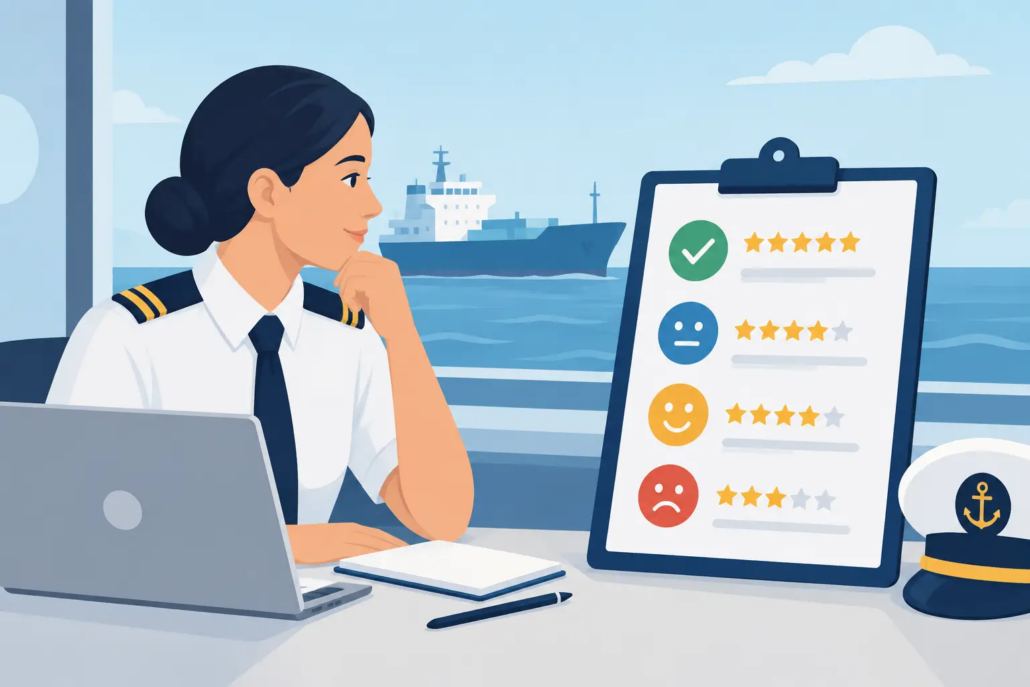
What STCW Course Feedback Should Tell You
A strong STCW course is not judged by whether the classroom was comfortable or whether the certificate arrived quickly. It is judged by whether you leave prepared to respond when an alarm sounds, a crew member needs first aid, or an emergency changes the plan in seconds. That is why STCW course feedback is worth reading closely before you book.
For new deckhands, career-switchers, yacht crew, charter operators, and marine businesses, reviews can reveal what a course page cannot: how instructors run practical drills, whether students receive useful coaching, and how well the training reflects the realities of working on the water. The best feedback does not simply say a course was “great.” It describes what participants learned, how they were challenged, and why they felt more capable afterward.
What Good STCW Course Feedback Reveals
STCW Basic Safety Training covers serious responsibilities. Depending on the course package and role, training may include personal survival techniques, fire prevention and firefighting, elementary first aid, personal safety and social responsibilities, and security awareness. These are not subjects to approach as a box-checking exercise.
When reviewing feedback, look for evidence that the course balanced required knowledge with hands-on application. A student who mentions deploying survival equipment, working through realistic fire scenarios, practicing rescue procedures, or receiving corrections during a drill is telling you more than someone who only mentions passing.
The strongest comments often focus on confidence built through repetition. Emergencies at sea are rarely convenient, and crew do not get time to search for instructions. Good training helps participants understand the sequence of actions, communicate clearly, and stay useful under pressure.
Practical sessions should feel purposeful
Practical work is where many students discover the difference between knowing a procedure and being able to perform it. Feedback should indicate that instructors explain the reason behind each action, not just the action itself.
For example, a useful survival exercise teaches more than how to enter the water or use a life raft. It gives students a chance to consider group management, cold-water exposure, signaling, buoyancy, and the discipline required to conserve energy. Fire training should develop situational awareness, correct extinguisher selection, safe approach techniques, and teamwork.
The setting matters, too. Training in Antigua brings a natural connection to the professional yachting and charter environment, but warm water alone does not make a course effective. The value comes from structured instruction, properly managed scenarios, and instructors who make each exercise relevant to life aboard.
Read Beyond the Star Rating
A five-star rating is encouraging, but it is only the starting point. One short review may reflect a smooth booking experience. Several detailed reviews can show whether the provider consistently delivers competent training.
Pay attention to the language students use. Comments such as “clear instruction,” “patient coaching,” “real-world examples,” and “well-organized practical sessions” are helpful because they point to teaching quality. Feedback from working crew is particularly valuable when it explains how the course relates to joining a yacht, maintaining safety standards onboard, or progressing toward commercial responsibilities.
It also helps to notice what type of student is leaving the review. A first-time sailor may value an approachable introduction to safety equipment and maritime terminology. An experienced crew member may be looking for efficient refresher training, current procedures, and instructors who understand professional expectations. Neither viewpoint is more valid, but your own goal should shape what you prioritize.
Be cautious with feedback that focuses only on speed, price, or the certificate. A course that is fast and affordable may be the right option for a specific refresher requirement, provided it meets the relevant standards. But if you are new to commercial yachting or building a long-term career, the quality of instruction and practical exposure deserve greater weight.
Questions Feedback Should Answer Before You Book
Useful course feedback should help answer several practical questions. Was the schedule clear and professionally managed? Were the facilities and safety equipment suitable for the exercises? Did instructors make time for questions? Were assessment expectations explained from the outset? Did students understand what certificate they would receive and how it applied to their intended role?
Look as well for comments about the learning environment. Safety training can be demanding, especially for participants who have limited experience in the water, are returning to formal training after years away, or feel apprehensive about fire exercises. A professional provider will maintain high standards without creating an atmosphere where people are embarrassed to ask for guidance.
This does not mean every session should feel easy. In fact, feedback that describes a course as challenging can be a positive sign when students also say they felt supported and properly briefed. Effective instructors raise the standard while giving people the tools to meet it.
Certification clarity matters
STCW requirements are connected to the type of vessel, flag administration, position, and employment route involved. Before booking, confirm that the training is appropriate for your objective, whether that is joining superyacht crew, working in charter, operating in tourism, supporting watersports activities, or meeting a company safety requirement.
Feedback can indicate whether a provider communicates this clearly, but it should never replace a direct conversation about your needs. If you are unsure which modules apply to you, ask before committing time and money. The right course is not always the largest package. It is the one that meets the standard required for your role while giving you the competence to use the training well.
For marine businesses, this same principle applies at a larger scale. A generic course may meet a baseline need, but teams operating passenger vessels, charter fleets, watersports centers, or marine transport services may benefit from training that reflects their equipment, operating conditions, and emergency procedures.
The Difference an Instructor Makes
Instructor quality is the thread that runs through meaningful STCW course feedback. Regulations set the framework, but experienced instructors turn that framework into usable knowledge. They can explain how a procedure applies on a busy charter day, during a watch change, in a tender operation, or when a crew member is overwhelmed.
Look for feedback that mentions instructors by their approach rather than just their personality. “Friendly” is welcome, but “clear, observant, and direct with corrections” tells you more. In safety training, good instructors make participants comfortable enough to learn while being precise enough to prevent bad habits.
They should also adapt their examples without diluting the standard. A future yacht stewardess, a captain renewing credentials, and a member of a resort watersports team may arrive with different backgrounds. Each needs the same respect for safety, but the explanation of risk and responsibility should connect to the work ahead.
Turn Feedback Into a Better Training Decision
Use reviews as one part of your decision, alongside course approval, certification details, practical content, dates, and the provider’s experience with your sector. Read recent feedback first, then look for themes that repeat across multiple comments. Consistency is more valuable than one exceptional review.
Once you have chosen a course, arrive ready to participate fully. Wear the required clothing, ask questions when a procedure is unclear, and treat every drill as a chance to build reliable habits. Your certificate may open a door, but your response in a real situation is what protects people, vessels, and careers.
At Ondeck Sailing, STCW training is approached as practical professional preparation, delivered in a Caribbean environment where safety, seamanship, and capable crew matter every day. Choose training that leaves you ready not only to hold the certificate, but to earn the confidence placed in it.

