
STCW Basic Safety Review: What to Expect
A yacht can look effortless from the dock: polished rails, taut lines, and a crew moving with quiet purpose. The reality changes quickly when there is smoke below deck, a person in the water, or an emergency call in rough conditions. That is why an STCW basic safety review matters. It is not simply a certificate to add to a resume. It is the foundation for responding calmly, correctly, and as part of a professional crew when conditions stop being routine.
For aspiring deckhands, charter skippers, watersports teams, and maritime businesses, STCW Basic Safety Training is often the first formal step toward commercial work. For experienced crew, a review is a useful way to understand what the course covers, what practical standards are expected, and when refresher training may be needed. The right course should feel relevant to the vessels and people you will work with, whether that is on a superyacht, passenger vessel, charter catamaran, or local excursion boat in the Caribbean.
What Is STCW Basic Safety Training?
STCW stands for Standards of Training, Certification and Watchkeeping for Seafarers. It is the international framework that sets minimum training standards for people working on ships and commercial vessels. Individual flag states, maritime administrations, employers, insurers, and vessel operators may add their own requirements, but STCW provides the common professional baseline.
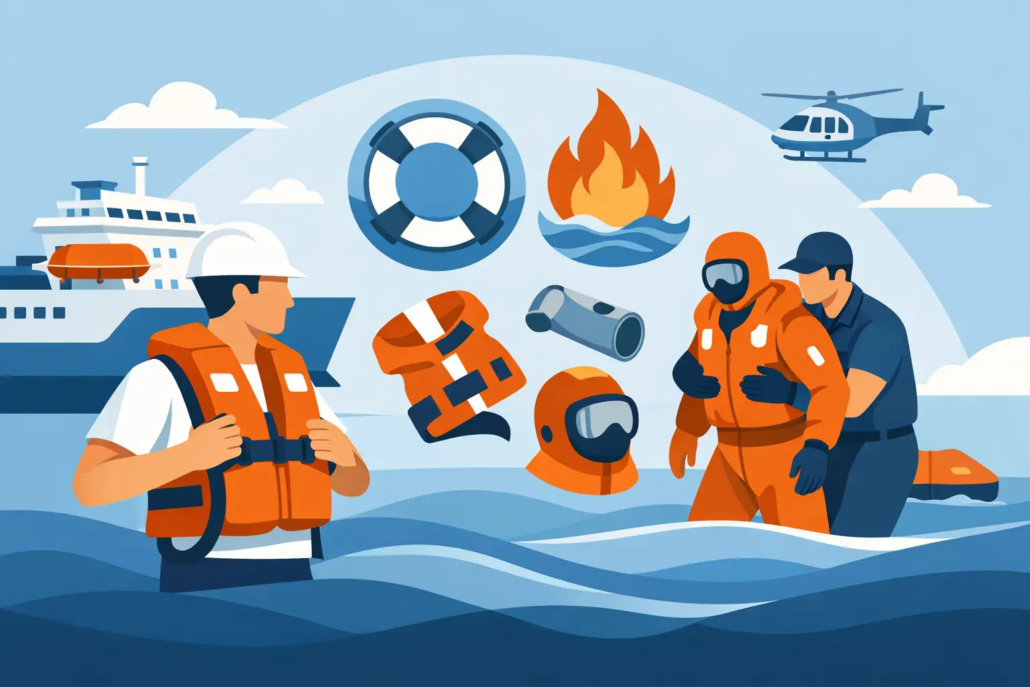
The basic safety package generally covers four core areas: personal survival techniques, fire prevention and firefighting, elementary first aid, and personal safety and social responsibilities. Depending on your role and the vessel, security awareness training may also be required. These subjects may sound straightforward on paper, yet each one addresses a high-pressure situation where knowledge alone is not enough.
A good training course combines classroom instruction with hands-on drills. You need to understand why an action is taken, then demonstrate that you can carry it out safely. That distinction is central to the value of STCW training. A crew member who has handled a lifejacket, entered the water in controlled conditions, used firefighting equipment, and practiced emergency communication is better prepared than someone who has only read a manual.
STCW Basic Safety Review: The Four Core Modules
Personal survival techniques
This module focuses on survival at sea following an abandonment or emergency evacuation. Participants learn how to wear and use lifejackets, understand the risks of cold water and exposure, recognize how to improve visibility and group survival, and use survival craft or emergency equipment where the course format allows.
The practical element can be demanding, particularly for people who are less comfortable in the water. It is designed to be realistic enough to build confidence without placing participants in unnecessary danger. You are not being trained to become an open-ocean rescue specialist. You are learning how to maximize your own chances of survival, help others, and avoid panic while waiting for recovery.
For Caribbean crew, warm water can make water-based training feel more approachable. It does not remove the need for discipline. Fatigue, injuries, darkness, swell, and the separation of crew from a vessel can turn a seemingly manageable situation into a serious one in minutes.
Fire prevention and firefighting
Fire is one of the most serious emergencies aboard any vessel because escape routes are limited and smoke spreads quickly through enclosed spaces. This module covers the causes of fire, fire classes, alarm procedures, extinguishing media, breathing apparatus awareness, and the importance of coordinated response.
The practical exercises are often the part participants remember most. Using an extinguisher or hose under instruction reveals why communication and teamwork matter. It also teaches an essential professional judgment: not every fire should be approached. Sometimes the correct response is to raise the alarm, contain the area, account for people, and follow the vessel’s emergency procedures rather than taking unnecessary personal risk.
Crew working on yachts and charter vessels should pay particular attention to galley risks, engine-room awareness, electrical equipment, fuel handling, and guest management. A rapid, calm response protects the vessel, but it also protects the people who may not understand what is happening or where to go.
Elementary first aid
At sea, professional medical assistance may be hours away. Elementary first aid training gives crew the ability to recognize an injury or illness, make an initial assessment, provide immediate care within their level of training, and communicate useful information to shoreside support or emergency services.
Expect instruction around basic casualty care, bleeding, burns, shock, recovery position, and the priorities of scene safety. The objective is not diagnosis. It is to prevent a situation from worsening, reassure the casualty, and ensure the right escalation takes place.
This module is especially relevant to charter operations, watersports providers, and passenger-facing teams. A guest with a cut foot, suspected heat illness, or a fall on deck needs prompt attention and clear documentation. Equally, crew must know when an incident requires evacuation or further medical advice rather than a quick onboard fix.
Personal safety and social responsibilities
The final core area is less dramatic, but it is where safe vessels are made. Personal safety and social responsibilities address safe working practices, communication, emergency duties, fatigue, substance misuse, harassment, pollution awareness, and the shared responsibilities of life aboard.
Commercial vessels rely on crews who can communicate clearly across ranks, departments, languages, and cultures. Unsafe behavior is rarely caused by one dramatic mistake. More often, it grows from poor housekeeping, unclear instructions, skipped checks, or a crew member who does not feel able to speak up. This training reinforces that safety is everyone’s responsibility, from a new deckhand to the captain.
Who Needs an STCW Certificate?
If you intend to work commercially at sea, STCW Basic Safety Training is commonly expected by employers and required by many operators. It is particularly relevant for yacht crew, deckhands, stewardesses and stewards, skippers, engineers, dive and watersports staff, charter crew, and personnel working aboard passenger or excursion vessels.
Requirements depend on the flag of the vessel, the nature of the work, the operating area, and your job title. A recreational sailor taking friends or family cruising may not need the same certification as a paid charter skipper. However, recreational experience does not replace formal commercial safety training when a role requires it.
For career-switchers, the certificate can be an early practical signal that you are serious about professional standards. It will not secure a job on its own. Employers also look for attitude, sea time, references, role-specific qualifications, and a willingness to work hard. But without the expected safety credentials, many commercial opportunities may not be open to you in the first place.
What the Assessment Is Really Testing
People sometimes worry that STCW training is a pass-or-fail ordeal. In practice, a quality course is built to teach and assess competence, not catch people out. Instructors want to see that you understand instructions, participate responsibly, use equipment correctly, and can make safe decisions within the scope of the training.
Preparation helps. Arrive rested, ready for water-based activity and practical drills, and willing to ask questions. Tell the training provider in advance about injuries, mobility limitations, medical conditions, or concerns about water confidence. Many issues can be managed safely with planning, but they should never be hidden.
The most valuable participants are not always the loudest or most experienced. They are the ones who listen, communicate, and treat every scenario as a chance to build habits they can use aboard. A fire drill becomes far more useful when you picture the engine-room access, guest cabins, fuel systems, and muster plan on the vessel where you expect to work.
Refresher Training and Keeping Your Skills Current
STCW certificates and refresher expectations can vary by course, issuing authority, flag-state rules, and employer policy. In many cases, the practical elements of personal survival and firefighting require evidence of continued competence or refresher training at set intervals, often every five years. Do not rely on assumptions or an old certificate in a drawer.
Before joining a new vessel or applying for a role, check the exact requirements with the employer, vessel manager, or relevant maritime authority. Confirm that your course is appropriate for the work you plan to do and that the certificate details are accurate. Names, dates, issuing body, course titles, and any security training should be easy to verify.
A refresher is not merely administrative maintenance. Even experienced crew can benefit from revisiting emergency procedures, especially after time ashore or a move between different vessel types. Equipment changes, operating procedures evolve, and small skills fade when they are not practiced.
Choosing the Right Training Environment
The course provider matters because the standard of delivery shapes how much you retain. Look for practical instruction, clear certification processes, experienced instructors, appropriate facilities, and a course schedule that allows time to learn rather than rush through the material. For businesses, bespoke group training can also help align safety instruction with the real risks of your operation.
Training in Antigua adds a useful dimension for crew entering the Caribbean yachting industry. The region is a major hub for chartering, regattas, private yachts, and marine tourism, so the professional context is close at hand. At Ondeck Sailing, the aim is to pair recognized safety training with the practical seamanship and industry awareness that help crew move confidently into Caribbean operations.
Your STCW certificate may begin as an employment requirement, but its real value appears in the moment someone needs you to act. Build the skills properly, keep them current, and carry that standard onto every vessel you step aboard.

