
Maritime Security for Sailors and Yacht Crew
A quiet anchorage, an overnight passage, and a busy marina can all present different maritime security concerns. For sailors and yacht crew, the goal is not to sail with unnecessary fear. It is to recognize what looks out of place, protect the people and equipment aboard, and make sound decisions before a small issue becomes a serious incident.
Maritime security is especially relevant for anyone moving between islands, working aboard charter or private yachts, joining delivery crews, or building a professional career on the water. The Caribbean remains one of the world’s great sailing regions, but good seamanship includes knowing how to assess local conditions, follow port requirements, and maintain a security-minded routine wherever you cruise.
Maritime Security Is Different From Maritime Safety
Maritime safety focuses on preventing accidents and responding to emergencies such as fire, flooding, collision, man overboard, or medical incidents. Maritime security concerns intentional acts that could threaten a vessel, its crew, guests, cargo, or operations.
That can include theft in a marina, unauthorized boarding at anchor, tampering with equipment, stowaways, cyber compromise of onboard systems, or suspicious activity around a vessel. In some operating areas and commercial roles, crews may also need to understand higher-level threats such as piracy, smuggling, terrorism, and restricted-area procedures.
The distinction matters because the response is not always the same. A safety emergency may require immediate action to preserve life and the vessel. A security concern may require observation, communication, controlled access, careful reporting, and an early decision to leave an area. Both rely on calm leadership and practiced routines.
Start With a Realistic Risk Assessment
The right maritime security plan depends on the vessel, itinerary, crew experience, and purpose of the voyage. A family on a week-long Antigua charter does not face the same risks as a commercial yacht preparing for an offshore crossing, and neither should adopt security measures that are out of proportion to the trip.
Start by looking at where you will be operating. Research ports of entry, anchorage conditions, marina access controls, local reporting procedures, and any regional advisories before departure. A well-used harbor with established marina security may call for standard precautions. A remote anchorage, an unfamiliar port after dark, or a vessel carrying high-value equipment may justify more deliberate watchkeeping and restricted access.
Your assessment should also consider the people aboard. New sailors may need simple, clear direction on locking hatches, securing personal items, responding to visitors, and avoiding casual disclosure of travel plans. Professional crew need to understand their specific security responsibilities, their reporting line, and the procedures set by the captain or vessel management.
Good Security Begins Before You Cast Off
Security is easiest to manage when it is built into normal preparation. Before leaving the dock, make sure crew and guests know who is responsible for access, communications, keys, documentation, and the watch schedule. Confirm that navigation and communication equipment is working, and carry the contact details needed for the next port, marina, agent, or emergency service.
Keep passports, vessel papers, licenses, cash, and other critical documents secure and organized. On a charter or private yacht, avoid leaving valuable electronics, dive equipment, tenders, or outboard fuel unsecured where they can be easily removed. Simple physical measures – locked lockers, secured companionways, marked gear, and a properly locked tender – deter opportunistic theft.
Be thoughtful about what you share publicly. Posting a real-time location, announcing that a vessel will be unattended, or sharing detailed travel plans can create avoidable exposure. This is not a reason to stop documenting a great Caribbean sailing trip. It is a reason to delay location-specific posts until you have moved on.
Control Access Without Losing Hospitality
Yachting is social, and crew often meet new people in marinas, anchorages, and waterfront bars. Professional courtesy does not mean allowing unrestricted access to the vessel. Visitors should be expected, welcomed by a crew member, and accompanied when appropriate.
In a marina, do not assume that a dock gate or security guard removes the need for onboard awareness. Check that gates, hatches, and deck lockers are secured when the boat is unattended. Know who has keys or access codes, and change access arrangements when crew changeover creates uncertainty.
At anchor, keep the deck clear of unnecessary valuables and consider how you would respond if an unknown vessel approached after dark. In most cases, clear communication and an alert watch are enough. If behavior seems suspicious, do not escalate the situation by confrontation. Create distance, notify nearby authorities or marina security when available, and record details that may help with a report.
Watchkeeping Is a Security Skill
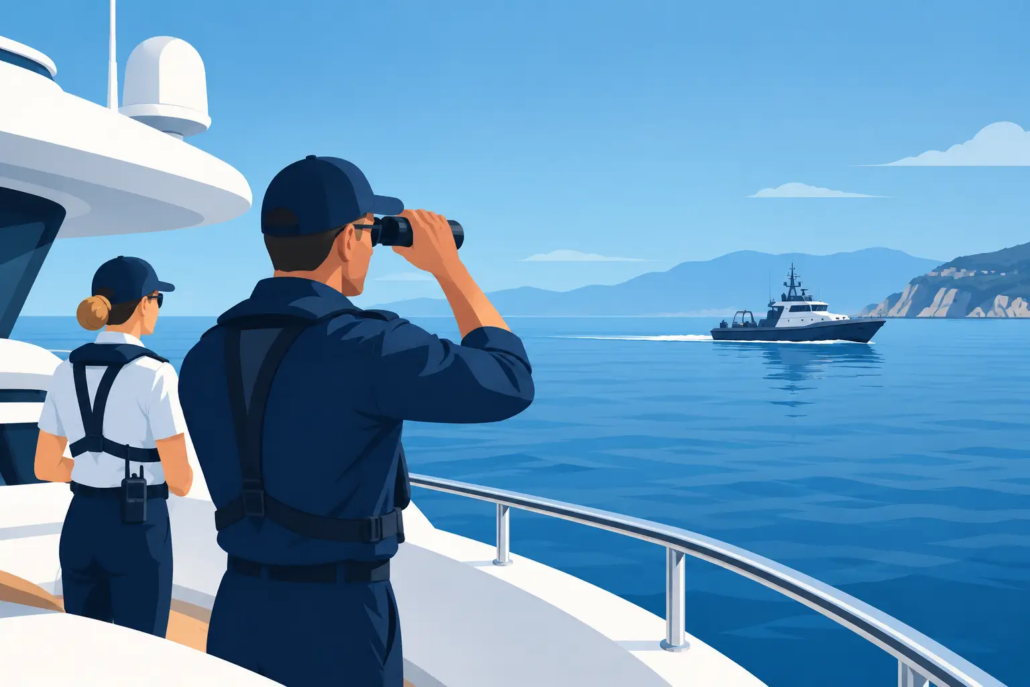
A proper watch is about far more than steering a course and looking for navigation lights. The person on watch should maintain awareness of nearby traffic, changing weather, fishing activity, approaches to the vessel, and anything that does not fit the normal pattern of the area.
This does not mean treating every nearby boat as a threat. It means recognizing that a vessel repeatedly altering course toward you, circling an anchorage, or approaching without an obvious reason deserves attention. Trust your observations, share concerns early, and wake the skipper before uncertainty becomes pressure.
For offshore passages, establish clear watch handovers. The outgoing watch should pass on relevant information about vessels in the area, radio traffic, equipment concerns, weather changes, and any unusual observations. A vague handover creates gaps. A concise, disciplined handover keeps every crew member working from the same picture.
Communications and Reporting Matter
When a security issue develops, the first priority is the safety of people aboard. Avoid unnecessary confrontation. Move away if you can safely do so, use appropriate radio channels or phone contacts, and follow the directions of local authorities.
Accurate reporting is valuable, even when the incident appears minor. Write down the time, location, vessel description, registration details, direction of travel, and a factual account of what happened. Avoid assumptions about motives. Clear facts give authorities, insurers, marina operators, and vessel managers something useful to act on.
Professional crew should also understand the vessel’s internal reporting process. A captain may need to notify the owner, management company, charter office, port authority, or security contact. Reporting promptly protects the vessel and helps other crews make informed decisions.
Cyber Awareness Belongs Onboard Too
Modern yachts depend on digital systems for navigation, communications, banking, bookings, guest information, and maintenance. That creates a security responsibility that is easy to overlook on a sunny day at anchor.
Use strong, individual passwords for critical accounts and avoid sharing credentials casually among temporary crew. Keep chartplotters, tablets, satellite communications systems, and onboard networks updated where practical. Be cautious with unexpected email attachments, payment requests, and messages that appear to come from a supplier, manager, or charter guest but contain unusual instructions.
The practical trade-off is convenience. Shared passwords and open onboard Wi-Fi are easy, especially during busy turnarounds. But a few basic controls can prevent a costly problem, protect guest privacy, and reduce disruption during a voyage.
Training Builds Better Decisions Under Pressure
Security awareness training is not about turning sailors into law enforcement officers. It is about developing the judgment to identify threats, follow procedures, communicate clearly, and respond within your role.
For aspiring yacht crew and commercial mariners, MCA and STCW-aligned security training can be an important part of employability and compliance. Depending on the role and vessel, you may need security awareness training or training for crew with designated security duties. The correct requirement depends on the vessel’s flag, gross tonnage, operating area, and your responsibilities onboard.
For recreational sailors, the same principles improve confidence. Learning how to plan a passage, maintain a watch, manage marina access, use VHF communications, and lead a crew gives you a stronger foundation for secure cruising. At Ondeck Sailing, practical seamanship and professional maritime training are designed to build that confidence in the real conditions sailors encounter across Antigua and the Caribbean.
Make Security Part of Your Normal Routine
The best maritime security habits are rarely dramatic. They are the quiet disciplines that become automatic: checking that the tender is locked, confirming a visitor’s purpose, giving a complete watch handover, securing documents, and speaking up early when something feels wrong.
As your sailing expands from day trips to overnight passages, charter work, regattas, or commercial operations, revisit those habits. A prepared crew can focus less on uncertainty and more on the reason they came to the water in the first place: capable sailing, good decisions, and the freedom to explore farther with confidence.

