
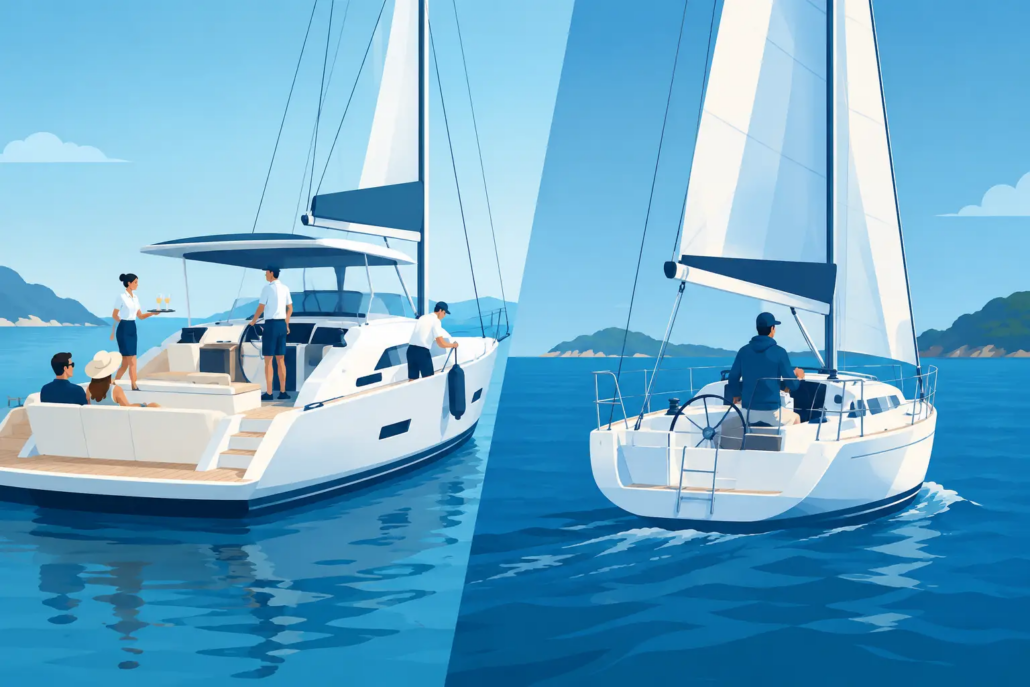
Crewed Charter Versus Bareboat: Which Fits?
The difference between waking to a freshly prepared breakfast in a quiet Antigua anchorage and checking the weather, plotting the route, and setting sail yourself comes down to one decision: crewed charter versus bareboat. Neither is automatically the better Caribbean vacation. The right choice depends on the experience you want on the water, the competence aboard, the time you have, and whether sailing is the point of the trip or the setting for it.
A crewed yacht gives you professional support and a highly tailored escape. A bareboat gives you the helm, the responsibility, and the satisfaction of running your own vessel. For many sailors, both belong in their future plans – just at different stages of their sailing life.
What a Crewed Charter Actually Includes
On a crewed charter, the yacht comes with professional crew. On a smaller sailing yacht, that may be a skipper and a chef or host. On a larger yacht, it can include additional deck crew, stewards, and specialists such as dive instructors. The crew operates the vessel, manages safety and navigation, prepares meals where included, and shapes each day around the guests’ preferences and the conditions.
This is not simply a hands-off cruise. A good skipper can explain the route, involve guests in sailing, arrange a quiet beach landing, or put the yacht in the right place for an afternoon snorkel. The difference is that the crew carries the operational responsibility. You can take the wheel when you want to, then step ashore for lunch without calculating the next weather window or worrying about where to find water and fuel.
For a group with mixed confidence levels, a crewed charter also removes a common source of friction. One person does not have to become the default navigator, cook, tender driver, and trouble-shooter while everyone else relaxes. The crew keeps the program moving, even when the breeze changes or a preferred anchorage is crowded.
Who benefits most from a crewed yacht?
Crewed charters work especially well for first-time sailors, multi-generational families, groups celebrating a milestone, and travelers who value time ashore as much as time under sail. They are also a strong choice for experienced sailors who know they want a genuine vacation rather than a week of command decisions.
They can be particularly valuable in a new cruising area. The Caribbean rewards local knowledge. A crew familiar with Antigua and neighboring islands understands the best approach to a reef, the anchorage that remains comfortable in a changing swell, and the beach bar worth reaching before the day boats arrive.
Crewed Charter Versus Bareboat: The Key Difference
A bareboat charter means you charter the yacht without professional crew. You or someone in your party is responsible for skippering, navigation, watchkeeping, docking, anchoring, provisioning, and the day-to-day safety of the boat. Charter companies will assess the skipper’s sailing history and qualifications before releasing the vessel.
The reward is real independence. You choose the pace, decide whether to sail another hour or stay put, and make every anchoring decision as a crew. For capable sailors, that freedom is the entire appeal. A bareboat week can turn classroom knowledge into practical judgment in a way few other experiences can.
It also asks more of you than many first-time charterers expect. Even in the trade winds, sailing is not only about hoisting sails and following a pretty coastline. Someone must interpret forecasts, maintain a proper lookout, understand charted hazards, brief the crew, manage battery and water use, and make conservative decisions when conditions are less friendly than planned.
A bareboat is therefore best viewed as a command role, not just a rental. If that responsibility sounds energizing, it may be exactly the trip you want. If it sounds like work you would rather avoid, a crewed charter will likely provide better value.
Cost, Privacy, and Control
At first glance, bareboat chartering usually has a lower base price because you are not paying for professional crew. But the full comparison is more nuanced. Bareboat guests typically budget separately for provisions, fuel, mooring fees, ice, restaurant meals, gratuities where applicable, and sometimes a damage deposit or insurance waiver. You also spend time provisioning, cooking, cleaning, and completing the check-in and check-out process.
A crewed charter carries a higher starting cost, with crew, service, and often food preparation included or arranged through an advance provisioning allowance. That cost can make sense when divided among a larger group, especially one that would otherwise spend heavily on dining and excursions ashore. Always review what is included before comparing quotes. Yacht size, cabin layout, itinerary, onboard dining, and local taxes can all change the final figure.
Privacy is another trade-off, although it is often misunderstood. Bareboat guests have total privacy because no one else lives aboard. On a crewed yacht, you share the vessel with professionals, but experienced crew are skilled at being present when needed and discreet when not. The right fit depends on whether you prefer complete self-containment or attentive service with expert guidance close at hand.
Control follows a similar pattern. Bareboat sailors have direct control over the plan, within the terms of their charter, weather, and local regulations. On a crewed yacht, you set the priorities while the skipper advises what is sensible and achievable. That partnership often produces a better itinerary, not a less personal one.
Are You Ready to Skipper a Bareboat?
The practical question is not whether you have sailed before. It is whether you can confidently command this boat, with this crew, in this destination. A skipper who is relaxed on a small lake or familiar home harbor may still need more experience before taking charge of a cruising yacht in open water.
Most charter operators want evidence of recent, relevant experience. A recognized qualification such as RYA Day Skipper can be a valuable foundation, but certifications are not a substitute for judgment. Requirements vary by yacht, country, insurer, and charter company. Some destinations or operators may request a sailing résumé, references, a formal license, or a professional skipper in addition to your stated qualification.
Before booking a bareboat, be honest about your ability to handle close-quarters maneuvering, reef sails early, navigate with electronic and paper backups, anchor securely, use a VHF radio, and respond calmly to an equipment issue. Your crew also matters. A skipper should not be the only person aboard who can operate the tender, take a watch, or assist during a docking maneuver.
If you are close but not quite ready, training before chartering is a smart investment. A practical course in Antigua offers warm water, consistent breeze, busy anchorages, and real passage planning – conditions that develop useful confidence without removing the need for sound seamanship. Ondeck Sailing programs can help sailors build from introductory skills through recognized RYA qualifications and more advanced command experience.
A Third Option: Charter With a Skipper
There is useful middle ground between full crew and full responsibility. A skippered charter provides a professional captain to run the yacht while guests remain as involved as they choose. You can learn sail handling, practice navigation, and take the helm, while the skipper retains final authority for safety and routing.
This option suits sailors building toward bareboat independence, groups with an experienced but rusty skipper, or anyone who wants local insight without the fuller service model of a crewed yacht. It can also be the sensible answer when the itinerary includes unfamiliar waters, nighttime arrivals, or a demanding schedule.
A professional skipper should never be treated as a workaround for a group that intends to ignore safety guidance. Their value lies in confident decision-making, local knowledge, and the ability to make the trip more relaxed for everyone aboard.
Choose the Charter That Matches Your Purpose
Choose a crewed charter when you want the Caribbean at its most effortless: sailing, swimming, great meals, and well-chosen anchorages without the operational load. Choose bareboat when you have the skills, recent experience, and appetite to lead the voyage yourself. Choose a skippered charter when you want to learn, regain confidence, or share responsibility with a professional.
The best charter is not the one that sounds most impressive. It is the one that leaves your crew feeling capable, safe, and eager for the next passage. Whether that means handing over the lines to a professional or taking the helm yourself, the Caribbean will give you plenty of reason to keep sailing.

