
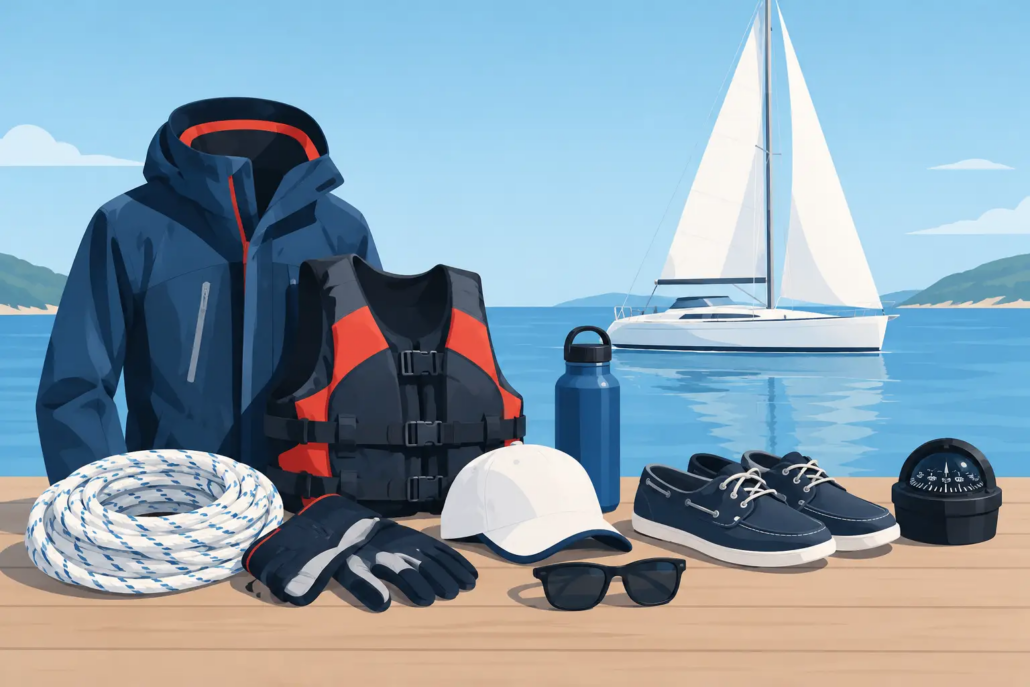
Essential Gear for Your First Sailing Course
A sailing course in Antigua can move quickly from a quiet morning briefing to a spirited reach across blue water, with spray over the rail and the sun high overhead. Choosing the essential gear for a sailing course means preparing to take part fully, not arriving with a duffel full of equipment you will never use. The right kit keeps you comfortable, focused, and ready to learn every maneuver, whether you are stepping aboard for your first RYA practical course or building sea time toward a professional qualification.
Most training boats provide the core onboard safety equipment. Your job is to bring the personal gear that fits properly, works in warm and wet conditions, and lets you move confidently around the boat.
Essential Gear for a Sailing Course in the Caribbean
Caribbean sailing is warm, but it is not always dry or gentle. Trade winds can build, rain showers can arrive without much warning, and a day on deck exposes you to more sun and glare than most visitors expect. Pack for changing conditions, while keeping each item practical.
Non-marking, secure footwear
A pair of closed-toe sailing shoes, lightweight water shoes, or sneakers with non-marking soles is one of the best investments you can make before a course. Decks get wet, lines run underfoot, and stable footing matters when you are learning to trim sails, move around the cockpit, or balance at the helm.
Avoid flip-flops for practical training. They are useful ashore, but they offer little grip or toe protection onboard. Heavy hiking boots are also usually unnecessary in Antigua and can mark a yacht’s deck. Choose footwear that drains well, dries reasonably quickly, and stays on your feet when you step from dock to boat.
Sun protection that stays put
Sun exposure is one of the main reasons first-time sailors become uncomfortable before the day is over. Use water-resistant, broad-spectrum sunscreen with a high SPF, and reapply it throughout the day. Do not rely on one application at breakfast.
A brimmed hat with a retaining clip or chin strap protects your face and neck without becoming a man-overboard drill at the first gust. Polarized sunglasses reduce glare off the water and make it easier to read waves, spot navigational marks, and see beneath the surface near reefs. Add a retainer, preferably one that floats. Losing sunglasses overboard is common, even among experienced sailors.
A long-sleeve UPF shirt or lightweight rash guard is often more useful than repeatedly applying sunscreen to your arms and shoulders. It also provides a little warmth after a rain shower. Choose breathable fabric, not heavy cotton, which holds water and can feel clammy for hours.
A light waterproof layer
Warm-weather sailors sometimes leave rain gear behind and regret it by midweek. You do not need full offshore foul-weather gear for most Caribbean practical courses, but a compact waterproof jacket is worth packing. It keeps a passing squall from ending your day early and gives you a windproof layer on an energetic sail home.
Look for a jacket with a hood, adjustable cuffs, and enough room to wear over a sun shirt. Breathability is useful, but it is not necessary to buy the most technical option for an entry-level course. For offshore, night, or higher-level training, ask in advance whether more substantial waterproof trousers and insulated layers are recommended. The right kit depends on the vessel, passage plan, season, and expected watch schedule.
Sailing gloves, if your hands need them
Gloves are optional, but they can be valuable if you are new to handling lines, prone to blisters, or joining an intensive week of practical training. Half-finger sailing gloves preserve dexterity for knots and small fittings while protecting your palms during repeated sheets, halyards, and docking lines.
They are not a substitute for proper line handling. Your instructor will show you how to hold, ease, and coil rope safely. If gloves make you feel less connected to the line, use them selectively rather than wearing them for every task.
Pack a Day Bag, Not a Floating Closet
Space aboard a training yacht is shared space. A soft-sided bag is easier to stow than a hard suitcase, and a small dry bag protects essentials from spray, rain, and the occasional wet cockpit. Keep your daily necessities together so you are not searching through clothing while the boat is underway.
Your day bag should include these genuinely useful items:
- Refillable water bottle and any electrolyte tablets you regularly use
- Sunscreen, lip balm with SPF, sunglasses, and a hat retainer
- Waterproof jacket, light snack, and a small microfiber towel
- Personal medication, motion-sickness treatment, and a phone in a waterproof case
Hydration deserves special attention. Wind and sea spray can make you feel cooler than you are, while the Caribbean sun steadily depletes you. Drink before you feel thirsty, especially during practical exercises that require concentration and physical movement.
For motion sickness, prepare before departure rather than waiting for nausea to start. Some sailors prefer medication, while others use acupressure bands or ginger. Medication can cause drowsiness, so check its effects beforehand and tell your instructor if it may affect you. Staying on deck, looking at the horizon, eating light meals, and taking the helm can also help.
Clothing That Works on a Training Boat
Bring quick-drying shorts or lightweight sailing pants, several moisture-wicking shirts, swimwear, and a warmer layer for evenings or air-conditioned classrooms. A thin fleece, quarter-zip, or long-sleeve technical top is usually enough for Antigua, but it can make a real difference after sunset or during a wet passage.
Avoid loose scarves, dangling jewelry, and clothing with long, unsecured ties. They can snag on winches, cleats, or moving equipment. Clothes should allow you to squat, step over coamings, and reach overhead without restriction.
For a multi-day course, pack more shirts than you think you need and fewer bulky items than you think you want. Saltwater, sunscreen, and humidity make a fresh dry shirt feel like a luxury. Laundry access varies by accommodation and schedule, so quick-drying fabrics are a practical advantage.
Documents and Course-Specific Essentials
Personal gear is only part of the preparation. Bring the course confirmation, valid photo identification, and any certificates or logbook records required for your level. If you are traveling internationally, keep your passport, travel documents, insurance details, and emergency contacts in a protected folder or waterproof pouch.
Professional candidates should be especially methodical. RYA, MCA/STCW, commercial licensing, and yacht crew pathways can involve prerequisites, medical documentation, sea-time evidence, passport photos, or prior certificates. Check the joining instructions well before travel. A missing document can create avoidable delays, even if your practical skills are ready.
A waterproof notebook and pencil are useful for practical courses and essential for many theory or safety programs. You may want to record knots, sail settings, navigation notes, watch routines, and feedback while it is fresh. Pencil works better than ink in damp conditions, and a simple clipboard or zip pouch keeps paper usable.
What Not to Buy Before You Start
New sailors often assume they need to own every piece of specialist sailing equipment before the first day. Usually, they do not. Life jackets or personal flotation devices, safety harnesses, navigation tools, and most onboard safety equipment are normally supplied for training. Confirm this with your course provider rather than buying equipment that may not meet the boat’s requirements or fit the training setup.
You also do not need expensive offshore sailing boots, a large marine electronics collection, or a technical sailing watch to learn effectively. A basic waterproof watch can be handy for drills and timing, but a phone should stay safely stowed while you are handling lines or working near the helm.
If you are progressing toward yachtmaster-level, commercial, or offshore work, your personal kit will naturally become more specialized. Buy that equipment after you understand how and where you sail. A crew member on Caribbean charter yachts needs a different wardrobe from someone standing cold-weather watches in the North Atlantic.
Get Ready to Learn, Not Just to Ride Along
The most useful thing you bring is a willingness to be hands-on. Arrive rested, keep your questions coming, and tell the instructor about any relevant medical needs, injuries, or concerns with water confidence. A sailing course is designed for participation: hoisting sails, taking a watch, practicing man-overboard recovery, navigating, and making decisions as part of a crew.
At Ondeck Sailing, the Caribbean setting adds real-world variety to that learning. You may begin the day practicing close-quarters handling and finish under sail with Antigua’s coastline off the beam. Pack for sun, spray, movement, and changing weather, then leave enough room for the confidence that comes from doing the work yourself.

