
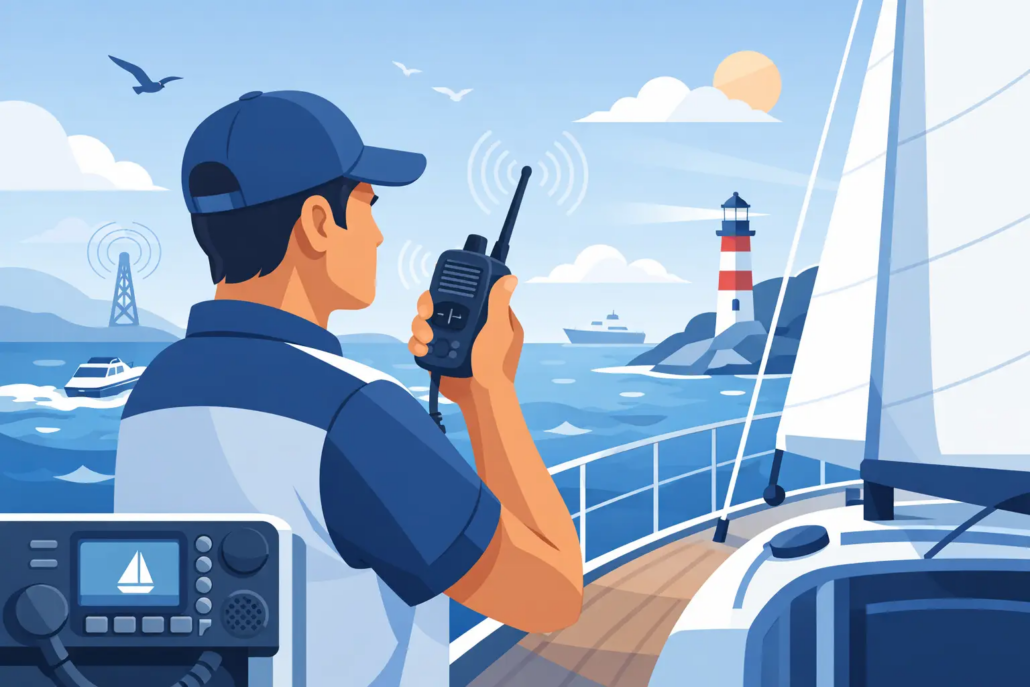
How to Use VHF Radio Safely While Sailing
A VHF radio is not background equipment on a sailboat. It is your direct line to nearby vessels, marinas, harbor authorities, bridge teams, and emergency services when conditions change quickly. Knowing how to use VHF radio confidently turns a potentially stressful moment – from a fouled prop to a medical concern offshore – into a clear, controlled exchange of information.
For Caribbean sailors, that confidence matters. Busy anchorages, regatta fleets, reef-lined approaches, and changing squalls all demand good communication as well as sound boat handling. The goal is not to sound like a professional radio operator. It is to be brief, accurate, and ready when it counts.
Start With the Radio Before You Need It
A VHF is most useful when it has been set up properly before departure. Confirm the radio has power, the antenna connection is secure, and the volume and squelch are adjusted so you can hear calls without constant static. Squelch removes background noise, but if it is turned too high, weaker transmissions can disappear completely.
If your boat has a fixed-mount VHF with Digital Selective Calling, or DSC, make sure it is programmed with the vessel’s MMSI number. DSC allows you to send a digital distress alert that identifies your boat and, when connected to GPS, can transmit your position. A handheld VHF is an excellent backup, especially in a ditch bag, but its range and battery life are usually more limited than a fixed radio connected to a proper antenna.
Before casting off, check that the radio is receiving. In many locations, a short radio check can be made through a marina, harbor station, or local radio-check service where available. Do not make a general call on Channel 16 simply to ask whether your radio works unless there is no appropriate alternative. Channel 16 must remain clear for distress, urgency, safety, and initial calling traffic.
Know Which VHF Channel to Use
Channel use varies by country, port, and local authority, so always review the chart, cruising guide, marina instructions, or notice to mariners for the area you are sailing. In the United States and much of the Caribbean, Channel 16 is the international distress, safety, and calling channel. It is used to establish contact, not to hold a long conversation.
Once you have reached another vessel or station, move promptly to an agreed working channel. Marinas, race committees, charter bases, and port authorities often publish their preferred working channels. During a regatta, the sailing instructions will identify the channels assigned to race management, safety boats, and fleet communications. Listen first. A channel that is clear at the dock may be active once the fleet is on the water.
Some areas use Channel 9 for recreational calling, which can reduce unnecessary traffic on Channel 16. Local practice matters, but the principle stays the same: use the designated calling channel to make contact, then shift away for the conversation.
Make a Routine Call Clearly
A routine VHF call follows a simple pattern. Say the name of the vessel or station you are calling, say it again, then identify your own vessel. Keep your first transmission short and wait for a reply.
For example: “Harbor Master, Harbor Master, this is sailing vessel Tradewind, Tradewind, over.”
When the station responds, suggest a working channel: “Harbor Master, this is Tradewind. Request a berth assignment. Please switch to Channel 72, over.” If they prefer another channel, they will tell you.
Speak at a measured pace and hold the microphone a few inches from your mouth. Press the transmit button, pause for a moment, then begin speaking. That small pause prevents the first words of your call from being cut off. Release the button when you finish so the other station can answer.
You do not need to say “over” at the end of every sentence during a quick exchange, but it is useful when the other person may not know you have finished. Avoid jargon, unnecessary radio chatter, and long explanations. A VHF is a shared safety tool, not a phone call.
How to Use VHF Radio in an Emergency
Your radio procedure should match the level of danger. The three most important emergency signals are Mayday, Pan-Pan, and Securite.
A Mayday call is for grave and imminent danger when immediate assistance is required. Examples include a fire, sinking, collision, abandoning ship, or a life-threatening medical emergency with no other immediate support. If your DSC-equipped radio is ready, activate the distress alert first by lifting the cover and holding the distress button as instructed by the manufacturer. Then make a voice Mayday call on Channel 16.
Use this order:
- “Mayday” repeated three times.
- “This is” followed by your vessel name repeated three times, call sign if available, and MMSI if known.
- Your position in latitude and longitude, or a clear bearing and distance from a known landmark.
- The nature of the distress and the assistance required.
- The number of people aboard and any vital details, such as injuries, a liferaft deployed, or the color and type of vessel.
- “Over.”
A complete call might sound like this: “Mayday, Mayday, Mayday. This is sailing vessel Tradewind, Tradewind, Tradewind. MMSI 123456789. Position 17 degrees 05 minutes north, 61 degrees 48 minutes west. We are taking on water after striking a reef and require immediate assistance. Four persons aboard, all wearing life jackets. White 42-foot sailing yacht. Over.”
Pan-Pan is for an urgent situation that is serious but not yet immediately life-threatening. A disabled vessel drifting toward danger, a non-critical medical problem, or a lost crew member whose circumstances are not yet a Mayday may justify Pan-Pan. Securite is used to broadcast important navigational or weather safety information, such as a floating hazard, a vessel operating with restricted maneuverability, or a dangerous local condition.
If you hear a distress call, stop transmitting and listen. Write down the vessel name, position, problem, and number of people aboard. The Coast Guard or local authority may acknowledge the call quickly, but nearby boats can often be the closest practical help. Do not relay or intervene unless requested, or unless no authority responds and you are able to assist safely.
VHF Etiquette Is Part of Seamanship
Good radio practice protects everyone’s ability to communicate. Monitor Channel 16 when underway unless you are actively using another channel, and return to it after a working conversation. Keep calls concise, avoid music or casual conversation on marine channels, and never use the distress button for a test.
Use plain language whenever possible. “We are one mile east of English Harbour, moving slowly north, with a line around the propeller” is more helpful than an unclear description delivered in a rush. If you are uncertain of your position, use your chartplotter, handheld GPS, chart, compass bearing, or nearby landmarks to give rescuers the best information you can.
VHF signals are largely line-of-sight. A handheld radio held at deck level may reach only a few miles, while a fixed VHF with an antenna mounted high on the mast can communicate much farther. Hills, islands, rain squalls, and antenna height all affect range. That is why a radio check before leaving the harbor is useful, but it does not guarantee the same reception offshore.
Practice Before the Pressure Arrives
The best time to learn radio procedure is during an ordinary day sail, not while managing a real emergency. Practice making a marina call, identify the distress button on your radio, and ask each crew member where the handheld backup is stored. Make sure at least two people aboard know how to read the boat’s position from the GPS and can describe the vessel accurately.
Formal sailing and safety training gives this skill the context it deserves: collision avoidance, passage planning, man-overboard response, weather decisions, and leadership under pressure. At Ondeck Sailing, practical training in Antigua places VHF use where it belongs – as part of capable, confident seamanship in real Caribbean conditions.
A calm voice on the radio begins with preparation. Learn the procedure, keep your message simple, and treat every transmission as part of the responsibility you accept when you take command of a boat.

