
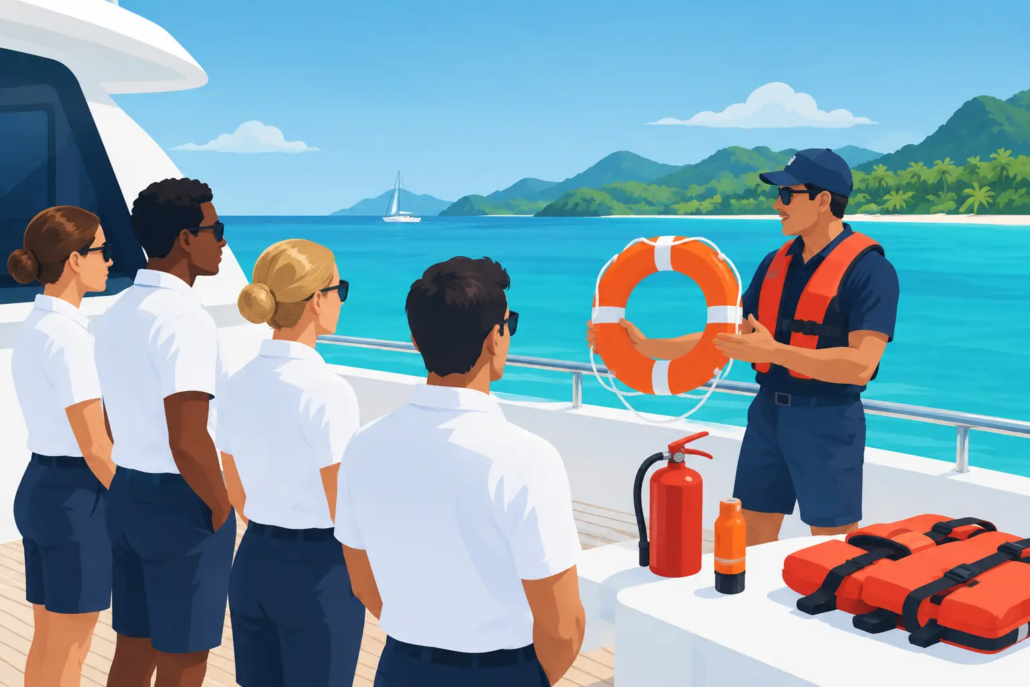
Yacht Safety Training for Caribbean Crews
A calm Caribbean anchorage can change quickly. A loose line, a galley fire, a crew member overboard, or an unexpected squall demands more than good intentions. Yacht safety training gives skippers and crew the practiced responses needed to act clearly when conditions become serious.
For recreational sailors, it turns a holiday charter into a more confident, capable trip. For deckhands, captains, and charter professionals, it is a foundation for working responsibly aboard commercial vessels. The goal is not to make sailing feel risky. It is to build the judgment, habits, and teamwork that let everyone enjoy the water with greater confidence.
What Yacht Safety Training Actually Builds
Safety training is often mistaken for a classroom exercise or a certificate required before joining a yacht. In reality, the strongest programs combine essential theory with practical repetition. You learn what equipment is for, then practice using it under pressure. You discuss an emergency plan, then take a role within it.
That distinction matters at sea. In an urgent moment, crew rarely rise to the level of their knowledge. They fall back on the actions they have practiced. A person who has handled a fire extinguisher, put on a lifejacket quickly, helped recover a casualty, and communicated a distress situation is far more useful than someone who has only read about those tasks.
Good yacht safety training develops four connected areas: personal survival, emergency response, prevention, and crew coordination. A capable sailor understands how to reduce the chance of an incident, but also knows what to do when prevention has not been enough.
The Core Skills Every Crew Member Needs
The exact training route depends on the vessel, cruising plans, and whether you are sailing privately or commercially. Still, several skills should be familiar to anyone spending meaningful time aboard.
Personal survival and recovery
Falling overboard is one of the most time-critical emergencies on a yacht. Crew need to know how to raise the alarm, maintain visual contact, stop or maneuver the vessel safely, deploy flotation, and recover a person from the water. Recovery is often harder than expected, particularly when the casualty is injured, tired, or wearing heavy clothing.
Personal survival training also covers lifejackets, immersion risks, life rafts, flares, and abandonment procedures. Caribbean waters are warm, but warm water is not a substitute for preparation. Distance from shore, darkness, sea state, dehydration, and panic can quickly turn a manageable situation into a serious one.
Fire prevention and firefighting
Fire aboard is especially dangerous because space is limited and escape routes may be restricted. Fuel, batteries, cooking equipment, electrical systems, and engine compartments all require care. Training should help crew recognize fire risks early, select the correct extinguisher, contain a fire where possible, and communicate clearly while protecting the rest of the vessel.
Prevention is the daily discipline here. Keep machinery spaces orderly, investigate electrical faults, manage fuel safely, know where extinguishers are located, and never assume another person has checked the galley or battery compartment.
First aid and medical decision-making
Yachts do not always have immediate access to medical care. A minor injury can become more difficult when you are offshore, moving between islands, or anchored in a remote bay. First-aid training helps crew respond to bleeding, burns, fractures, shock, heat illness, seasickness, and unconscious casualties while arranging further care.
The practical value is not simply knowing how to use a bandage. It is learning to assess the scene, protect the casualty, record key information, and decide when a situation requires outside support. For professional crew, this calm decision-making is a major part of being trusted aboard.
Distress communications and emergency equipment
A well-equipped yacht is only safer when the people aboard can use its equipment. Crew should know how to send a distress alert, make a clear emergency call, identify the vessel’s position, and use visual signaling equipment appropriately. They should also understand the location and purpose of emergency gear before leaving the dock.
A thorough pre-departure briefing covers lifejackets, fire equipment, first-aid supplies, bilge pumps, emergency steering, communication devices, and the abandon-ship plan. On a charter yacht, this briefing should be practical and specific to that boat, not a rushed speech delivered while guests are unpacking.
Why Training Must Match Your Role
A first-time sailor joining a week-long Antigua charter does not need the same depth of training as a deckhand building a superyacht career. Equally, an experienced racer may be highly competent on deck but still need formal safety certification for commercial work.
For leisure sailors, a practical sailing course that includes safety procedures, man-overboard recovery, anchoring, weather awareness, and crew leadership is often the right next step. It builds skills that translate directly to family cruising, bareboat charters, and regatta participation.
For maritime professionals, recognized MCA and STCW basic safety and security training can be essential. These courses address the professional responsibilities of working aboard, including personal survival techniques, firefighting and fire prevention, elementary first aid, personal safety and social responsibilities, and security awareness. Requirements can vary by flag state, employer, vessel type, and job role, so it is wise to confirm what your intended position requires before booking.
Skippers and charter operators may need to go further. A captain is responsible not only for their own actions, but for vessel readiness, passenger briefings, watchkeeping, maintenance standards, weather decisions, and the effectiveness of the whole crew. This is where advanced practical qualifications, sea time, and repeated command experience become as valuable as any individual certificate.
Train for the Caribbean You Will Actually Sail
The Caribbean is an exceptional place to learn because it offers consistent trade winds, warm water, short passages between islands, and a lively yachting community. It also presents real operational decisions. Gusts can accelerate around headlands, reefs require disciplined navigation, tropical weather needs close attention, and popular anchorages demand careful boat handling.
Training in these conditions gives safety lessons context. You are not merely discussing a squall line or a crowded mooring field. You are learning to prepare the vessel, brief the crew, reef early, organize a watch, and make conservative decisions before pressure builds.
That does not mean every sailor needs offshore training before enjoying a coastal cruise. The right level depends on your plan. A day sail with an experienced instructor, a bareboat charter with friends, and a professional delivery passage each call for different preparation. The common standard is simple: no one should be surprised by their role when something goes wrong.
How to Get More From Your Safety Course
Arrive ready to participate, not just to pass. Ask to locate and handle the safety gear. Practice the knots and recovery methods until they become familiar. During onboard drills, take different roles so you understand how communication flows between the helm, the person spotting the casualty, and the crew handling equipment.
After the course, keep the skills active. Before every trip, inspect your safety equipment, review emergency contacts, and brief everyone aboard. Run a short man-overboard discussion with your crew. Check that new guests know how to use a lifejacket and where to find the VHF radio. These small habits set the tone long before an emergency develops.
At Ondeck Sailing, safety instruction sits alongside practical sailing, professional maritime qualifications, and real Caribbean time on the water. That combination matters because confidence is earned through capable instruction and repeated practice, not through a certificate alone.
The next time you step aboard, take a moment to ask one useful question: if conditions changed in the next five minutes, would every person know what to do? Training is how that answer becomes yes.

