
ICC versus Boatmaster for Caribbean Skippers
A skipper taking friends around Antigua’s coast and a captain running a paid charter may both look capable at the helm. They do not, however, need the same credential. The ICC versus Boatmaster decision comes down to what you intend to do on the water, where you will operate, and whether money changes hands.
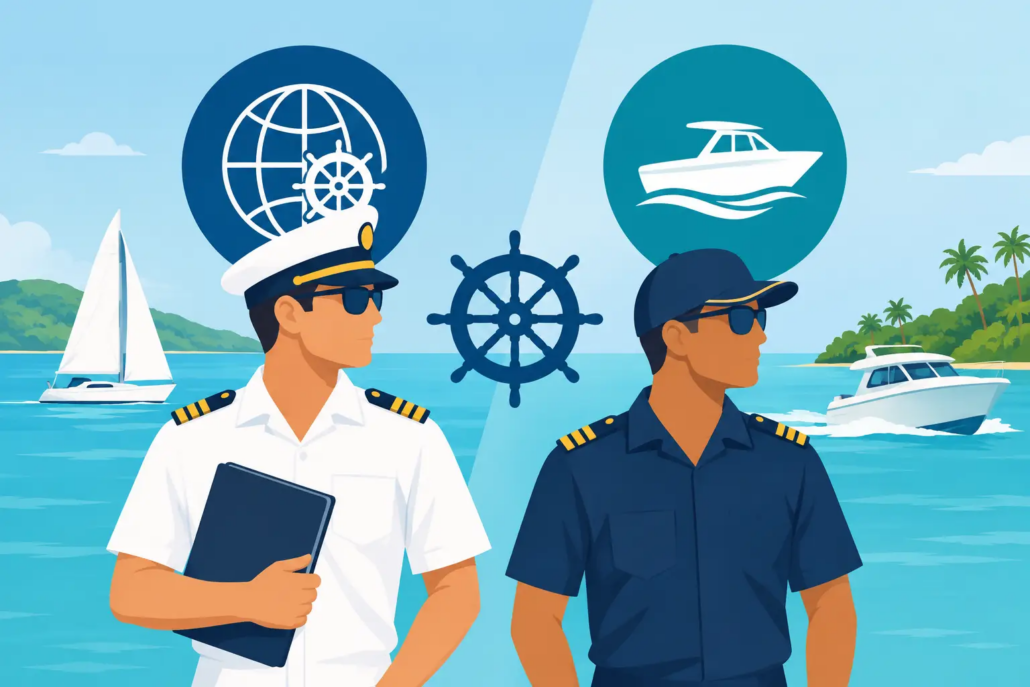
The International Certificate of Competence, or ICC, is primarily a recreational document designed to show practical competence for private boating. A Caribbean Boatmaster qualification is built for commercial responsibility in the region, with greater emphasis on operating vessels professionally, managing passengers, and meeting local licensing expectations. They can both have value, but they are not interchangeable.
ICC versus Boatmaster: the practical difference
The ICC is often requested by charter companies and authorities when a visiting sailor wants to operate a private yacht or powerboat abroad. It gives a recognizable snapshot of competence, usually covering either sail, power, or both, depending on the issuing authority and assessment route. For a sailor planning a bareboat vacation, a private yacht delivery, or recreational use in waters where an ICC is accepted, it can be a straightforward and useful document.
Boatmaster is a different proposition. It is intended for people operating commercially in the Caribbean: charter captains, excursion-boat operators, water-taxi crews, tourism businesses, workboat operators, and mariners moving into professional command. Rather than simply proving that you can handle a boat for private use, it addresses the duty of care that comes with carrying passengers, working to a schedule, and operating within a commercial framework.
That distinction matters. If guests are paying for the trip, an ICC alone is unlikely to satisfy the requirements of a local authority, insurer, employer, or vessel operator. The appropriate license will depend on the vessel, operating area, flag, local regulations, and the type of commercial activity. Always confirm the specific requirement before committing to a course or accepting a role.
What an ICC is designed to do
An ICC is best viewed as a travel-friendly proof of recreational boating competence. Its appeal is simplicity. If you have solid hands-on experience and need a recognized certificate for a private charter or overseas cruising plan, it can help demonstrate that you are not arriving at the dock as an unknown quantity.
For sailors, the relevant ICC category normally reflects the type of craft and waters involved. A charter company may want evidence that you can safely plan a passage, navigate, berth, anchor, handle sails, use radio communications, and make sound decisions when weather changes. Powerboat operators may need to demonstrate equivalent control, collision avoidance, and close-quarters handling skills.
However, recognition is not universal. The ICC originated through a European framework, and availability or acceptance depends on nationality, residence, issuing authority, and destination. Some charter operators accept it readily. Others prefer an RYA qualification, documented experience, a practical checkout, or a combination of all three. In the Caribbean, local rules can be more significant than a document commonly recognized in Mediterranean charter markets.
An ICC also does not replace training. A certificate may open a conversation with a charter company, but it does not prepare a skipper for every cruising ground. Antigua’s trade winds, reef systems, busy anchorages, squalls, and coral-lined approaches reward practical local awareness as much as formal competence.
When Boatmaster is the stronger route
Boatmaster training is for people whose boating has become a job, a business, or a serious professional ambition. The program is particularly relevant in the Caribbean, where tourism, watersports, charter operations, inter-island transport, and marine services create regular demand for qualified personnel.
A Boatmaster candidate should expect training that looks beyond basic boat handling. Professional operators must understand safety management, emergency response, navigation, rules of the road, passenger care, vessel stability considerations, local operating requirements, and the judgment needed to manage an evolving situation. The standard is not merely getting the vessel underway. It is taking responsibility for the vessel and everyone aboard.
This makes Boatmaster a strong choice for a crew member stepping up to command, a local operator launching a day-charter business, or a resort watersports manager responsible for safe marine operations. It can also be the more credible route for a professional seeking employment with a Caribbean-based commercial operator.
The exact privileges of a Boatmaster license are determined by the relevant authority and any endorsements, vessel limitations, operating areas, and supporting certificates required. A candidate should check whether they also need STCW safety training, medical certification, sea time, radio qualifications, security training, or additional local approvals. Professional licensing is rarely one document in isolation.
Recreational chartering versus commercial operation
The cleanest way to choose is to start with the purpose of your next season on the water.
If you are booking a private bareboat charter with family, building confidence before a Caribbean cruise, or wanting an accessible certificate that supports recreational boating overseas, the ICC may be appropriate. You may also find that an RYA practical qualification provides stronger evidence of training, particularly if you want structured progression from competent crew through Day Skipper and beyond.
If you will captain a paid charter, carry fare-paying passengers, run a watersports business, operate a tour vessel, or seek professional command work, Boatmaster is usually the more relevant conversation. A commercial operator has obligations that go well beyond the skills expected of a vacation skipper. Those obligations affect your training pathway from day one.
There is a middle ground. Some experienced recreational sailors take Boatmaster because they see a future in professional work, while some commercial crew members first build foundational skills through recreational sailing and power courses. The best route is not always the fastest certificate. It is the one that matches the level of responsibility you expect to hold.
Recognition, location, and why details matter
Neither credential should be judged by name alone. Before choosing, ask four practical questions: Where will I operate? What vessel will I command? Will I be carrying passengers or receiving payment? Which authority, insurer, charter company, or employer must accept my qualification?
A skipper planning to charter in Greece may encounter very different expectations from someone running an excursion vessel from Antigua. Likewise, a 30-foot sailing yacht used privately creates a different licensing picture from a powered passenger boat operating daily between beaches, hotels, and anchorages.
The vessel’s flag can also matter. A certificate recognized by one administration may not automatically meet the requirements of another. Employers may have their own standards above the legal minimum, particularly when guest safety and reputation are on the line. Ask for the requirement in writing where possible, then select training that clearly supports it.
Build the skills behind the certificate
Credentials carry weight when they reflect genuine competence. That means time on the water, close-quarters maneuvering, route planning, weather interpretation, safety drills, and calm decision-making when the plan changes. A course should give you more than a certificate to place in a wallet. It should leave you ready to take command responsibly.
For aspiring professionals, practical repetitions are especially valuable. Docking in wind, managing a man-overboard recovery, briefing passengers, handling an engine issue, and making a conservative weather call are all moments when theoretical knowledge must become action. Training in Antigua adds an extra layer of value: warm-water conditions, consistent trade winds, active yachting traffic, and real Caribbean cruising decisions.
Ondeck Sailing can help candidates identify a progression that fits their intended role, whether that begins with practical sailing experience or moves directly toward regional commercial licensing and supporting safety qualifications.
Choose for the work you want to do
The ICC is a useful recreational competency certificate when its issuer and destination recognize it. Boatmaster is the more purposeful choice for Caribbean commercial operations and the responsibilities that come with being paid to take others on the water. Neither is automatically better – they solve different problems.
Choose the qualification that matches the vessel, the voyage, and the people relying on your judgment. The right course should make your next Caribbean passage feel not only more possible, but properly prepared for.

