
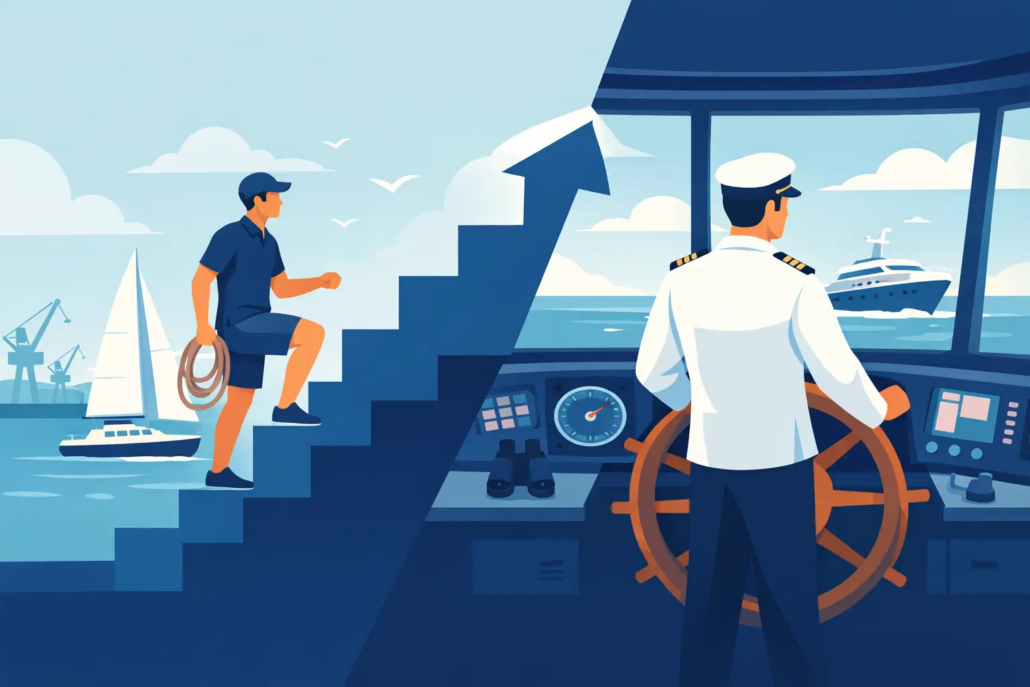
How Sailing Careers Move From Deck to Captain
A sailing career is not built by collecting certificates in a classroom and hoping a berth appears. It is built through capable boat handling, sound judgment, documented sea time, and qualifications that match the work you want to do. For people considering sailing careers, the first decision is not which course to take. It is whether you see yourself working aboard private yachts, running charter boats, leading watersports teams, or progressing toward commercial command.
Antigua is a strong place to make that decision practical. Warm water, reliable trade winds, busy anchorages, and an active yachting community create the kind of environment where skills are used every day, not just demonstrated once for an assessment. The route can be demanding, but it also offers a career that moves between serious responsibility, international travel, and exceptional time on the water.
Sailing Careers Start With a Clear Job Target
The marine industry is broad, and the right qualifications depend on where you intend to work. A charter skipper needs confident passage planning, guest management, local knowledge, and the ability to keep a crew comfortable as well as safe. A deckhand on a superyacht needs strong practical seamanship, safety training, maintenance awareness, and a professional approach to working within a larger crew.
Someone building a career in Caribbean tourism or watersports may need a regional license, small-craft handling skills, and safety credentials that meet the expectations of operators and insurers. A future captain needs all of that, plus increasingly advanced navigational judgment, leadership, and experience making decisions when conditions are less forgiving.
Choosing the destination first prevents wasted time and training. There is no single certificate that makes someone qualified for every vessel, territory, or commercial role. Employers, flag states, insurers, and charter companies may each have their own requirements.
Yacht Crew and Deckhand Roles
Deckhand work is often the entry point for people who want to join the professional yacht industry. The work is hands-on: line handling, tender operations, washdowns, deck maintenance, watchkeeping, guest support, and safety routines. It rewards people who arrive prepared, work well in close quarters, and understand that professionalism matters as much as enthusiasm.
MCA/STCW basic safety and security training is commonly expected for commercial yacht crew. From there, practical sailing and powerboat competence can make a candidate more useful on smaller yachts, sailing yachts, and active charter programs. Sea time, references, and a reputation for being reliable will carry real weight when applying for that first position.
Charter Skipper Work
Charter skippers carry a different kind of responsibility. They are responsible for the vessel, but they are also the host, route planner, weather interpreter, and calm voice when a guest is seasick, nervous, or late for a flight. Strong boat handling must sit alongside customer awareness.
A structured progression through RYA practical and theory training can provide a clear foundation, from early crew experience through Day Skipper and toward Yachtmaster-level capability. The exact license required to skipper commercially varies by vessel, location, and operation. A skipper should always confirm what the relevant charter company and local authority require before accepting work.
Watersports, Tourism, and Marine Operations
Caribbean resorts, excursion companies, dive operators, and watersports businesses need competent people who can operate vessels safely while delivering a polished guest experience. These roles can suit people who enjoy teaching, guiding, and working in a fast-paced tourism environment.
A Caribbean Boatmaster program or appropriate captain, charter, or commercial license can be relevant depending on the type of vessel and operation. First aid, safety training, VHF radio knowledge, and practical passenger management are equally valuable. For marine businesses, bespoke training can also help teams establish common operating standards rather than relying on uneven individual experience.
Captain and Command Pathways
Command is earned in stages. A captain needs the technical ability to navigate, maneuver, manage maintenance, and respond to emergencies, but the larger challenge is judgment. When a forecast changes, an engine alarm sounds, or a guest itinerary becomes unrealistic, the captain must make the right call early and explain it clearly.
This pathway usually combines advanced practical training, theory knowledge, logged sea time, commercial safety courses, and increasingly responsible roles aboard. Yachtmaster preparation and assessment can be an important milestone for sailors seeking to demonstrate an advanced standard of seamanship. It is not a shortcut around experience. It is a way to validate experience that has been built carefully.
Qualifications That Support Sailing Careers
Training has the most value when it creates usable competence. RYA practical courses build skills such as sail handling, close-quarters maneuvering, anchoring, collision regulations, pilotage, and watchkeeping. Theory courses strengthen the knowledge behind those decisions, including chartwork, tides, weather, passage planning, and electronic navigation.
For commercial work, safety credentials are often just as essential. STCW courses cover core emergency and security training that employers may require before crew step aboard. Depending on the role, candidates may also need medical certification, radio qualifications, local licenses, or specific endorsements. Requirements can change, particularly across jurisdictions, so treat course selection as a professional plan rather than a fixed checklist.
The strongest candidates combine formal credentials with recent, relevant time afloat. A certificate may show that you met a standard on assessment day. A well-kept logbook shows that you have continued to use those skills in varied conditions.
Sea Time Turns Training Into Employability
Do not wait until every course is complete before looking for ways to sail. Join deliveries when appropriate, crew on local boats, take part in regattas, assist with charter turnarounds, and seek opportunities to handle boats under supervision. Each experience teaches something a course cannot fully replicate: how a vessel behaves when loaded differently, how a crew communicates under pressure, or how quickly a simple plan changes with wind and traffic.
Keep accurate records. Log dates, vessel details, miles, passages, watches, responsibilities, and the conditions encountered. Be honest about your role. Employers and assessors value clear evidence more than inflated claims, and a detailed logbook makes it easier to identify gaps in your experience.
Regattas can be especially useful for developing teamwork and boat-speed awareness. They are not a replacement for commercial sea time, but they expose sailors to disciplined preparation, fast communication, and the reality that every crewmember’s job affects the result.
Choose Training That Reflects the Work
A low-cost course is not always good value if it gives you little helm time, limited instructor feedback, or no exposure to real passage planning. Look for training that is practical, properly structured, and delivered in conditions that demand attention. Warm Caribbean water does not mean easy sailing. Trade winds, reef navigation, squalls, tidal considerations, and active harbors provide valuable lessons for sailors who are ready to learn.
Ondeck Sailing brings recreational and professional routes together in Antigua, allowing students to progress from early sailing experience to RYA, MCA/STCW, Boatmaster, and commercial licensing pathways in one maritime setting. That breadth matters for career-switchers who are still refining their goal, as well as for working professionals who need a specific qualification without losing time away from the water.
Build a Career Plan You Can Actually Follow
Start by naming the role you want within the next 12 to 24 months. Then identify the qualifications, sea time, and practical skills commonly requested for that role. If you are new to sailing, begin with crew-level instruction and spend time aboard different boats before committing to an advanced path. If you already sail recreationally, assess your gaps honestly. You may be comfortable trimming sails but need stronger navigation, powerboat handling, safety training, or commercial awareness.
Set milestones that lead to work, not just certificates. For example, complete foundational safety training, gain practical experience, build a logbook, take the next appropriate RYA course, and speak with operators in the sector you want to enter. Be prepared to take an entry-level job that teaches you vessel routines and industry expectations. Many respected captains began by making themselves indispensable on deck.
Your attitude remains part of your qualification. Arrive early, keep learning, take care of equipment, communicate clearly, and accept feedback without defensiveness. On a boat, small habits are visible. So is the person who stays calm, helps without being asked, and treats safety as a responsibility rather than a formality.
The sea rewards prepared people, but it also rewards those willing to keep progressing. Choose a direction, train to the standard the job demands, and keep building the experience that turns a sailing ambition into a trusted role aboard.

