
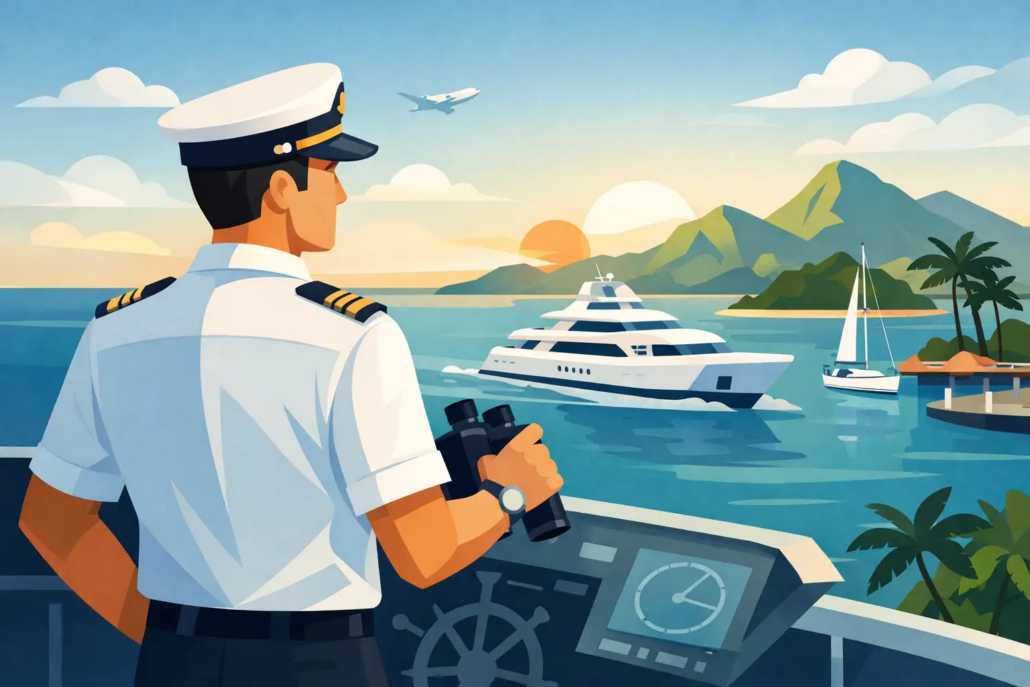
Professional Captain Training for Caribbean Careers
A captain is the person everyone looks to when the weather shifts, an engine alarm sounds, a guest needs reassurance, or a tight harbor approach leaves no room for guesswork. Professional captain training is built for that responsibility. It turns practical boat handling into sound command judgment, while giving aspiring captains the recognized qualifications and real-world confidence needed to work on the water.
For yacht crew, charter operators, watersports businesses, and career changers, the route is rarely a single course. A capable commercial captain needs a progression of seamanship, navigation, safety training, logged experience, and the right license for the vessel and operation. Training in Antigua adds another advantage: warm water, consistent trade winds, active marinas, and the day-to-day pace of Caribbean yachting.
What Professional Captain Training Actually Covers
Professional captain training goes beyond learning to steer a boat or trim sails. It prepares you to take responsibility for a vessel, its crew, passengers, equipment, and voyage plan. The best programs place theory alongside repeated practical decision-making, because a captain must be able to apply knowledge when conditions are changing quickly.
On the water, training develops close-quarters handling, docking, anchoring, man-overboard recovery, passage planning, watchkeeping, collision regulations, and the ability to assess weather before and during a passage. You will also learn how vessel type changes the job. Commanding a sailing yacht, a power-driven charter vessel, or a small commercial craft requires different handling techniques, but all demand calm control and disciplined procedures.
The professional element adds another layer. Captains must manage risk, brief crew and guests, maintain safety equipment, respond to emergencies, and keep operations within the limits of their certification and local regulations. A qualification matters, but a captain’s reputation is built on how consistently they prepare, communicate, and make good decisions.
Choose the Right Captain Qualification Path
There is no universal captain’s license that covers every country, vessel size, and type of commercial operation. The right training pathway depends on where you want to work, the size and purpose of the vessel, whether you will operate commercially, and the requirements of insurers, employers, charter companies, and flag authorities.
For many aspiring yacht professionals, an RYA progression provides a clear framework. Practical courses build boat handling and command experience, while theory courses develop navigation, chartwork, tidal planning, meteorology, and collision regulations. As experience grows, candidates can work toward advanced levels such as Yachtmaster qualifications, subject to the required sea time, passages, and assessment standards.
For commercial work, safety credentials are equally central. MCA/STCW basic safety training and security instruction are commonly expected within the international yacht industry. These courses address survival, firefighting, first aid, personal safety, social responsibilities, and security awareness. They are not a formality. They provide the procedures that help a crew act quickly and effectively when an emergency is real.
Regional licensing may also be the better fit for a local operation. Caribbean Boatmaster training and captain, bareboat skipper, charter, or commercial licensing can support work in regional tourism, watersports, transport, and charter sectors. The key is to match the course outcome to the job you intend to do rather than collecting certificates without a clear operational plan.
Start With Your Intended Role
A deckhand aiming for a first captain’s position needs a different route from an experienced recreational sailor planning to run paid charters. Someone operating day trips around Antigua may prioritize local commercial and safety requirements, while a candidate pursuing a career on larger yachts may need to focus on internationally recognized RYA and STCW credentials.
Before enrolling, define the type of vessel you want to command, where it will operate, and whether passengers will be carried for hire. Then identify the certification standard required by the employer, authority, or insurer. This approach saves time and makes each course a purposeful step forward.
Experience Is Not Optional
Courses sharpen skills, but sea time supplies context. Log your days carefully, including dates, routes, distances, night hours, responsibilities, and conditions. A record that shows varied experience is more valuable than a high number with little detail.
Seek time in different situations: harbor maneuvering in crosswinds, longer passages, night navigation, sailing with a short-handed crew, and operating in busy anchorages. If your goal is commercial command, look for opportunities to take supervised responsibility for planning, briefings, maintenance checks, and guest management. That is how training becomes command readiness.
Why Caribbean Training Builds Better Practical Judgment
A classroom can explain wind effects and anchoring technique. Antigua makes you use them. Trade winds, clear but busy waters, reef awareness, changing sea states, and active harbors create an environment where practical skills are exercised every day.
The Caribbean is also a working yachting region, not simply a beautiful backdrop. Training around professional crews, charter operations, marinas, and regattas gives candidates a closer view of the standards expected in the industry. You learn how professional operations prepare vessels, manage guests, and make safety decisions before leaving the dock.
There is a trade-off, however. Warm water and reliable weather make training enjoyable, but they should not create complacency. A professional captain must be prepared for the conditions they will meet elsewhere, including cold-water operations, stronger tides, reduced visibility, and more demanding seasonal weather. The strongest training plan combines Caribbean practical experience with a realistic understanding of your future cruising ground.
The Skills Employers Notice First
Employers do look for certificates, especially when a role requires specific credentials. Yet qualification alone does not guarantee a captain’s job. In interviews and trial days, the details often stand out: whether you arrive prepared, communicate clearly, maintain a clean and safe working area, and remain composed when plans change.
Strong captains make navigation and weather planning routine rather than dramatic. They brief crew before a maneuver, assign roles clearly, and create space for questions. They also know when not to go. Canceling or adjusting a trip due to sea state, mechanical concerns, or an inexperienced guest group is sometimes the most professional decision available.
Technical competence matters as well. You should be comfortable with pre-departure checks, emergency equipment, basic engine awareness, radio procedure, passage planning, chart and electronic navigation, and safe tender operations. You do not need to be a marine engineer, but you do need to recognize when a problem needs immediate attention and when to call for specialist support.
Build a Training Plan That Leads to Work
The most effective professional development plan is staged. Begin by establishing solid practical and theoretical foundations. Add safety and security training early, then build sea time while progressing toward the qualification level your target role requires. If you are moving into charter work, include guest management and local operating knowledge in your preparation.
A useful plan should also account for the difference between recreational competence and commercial responsibility. You may be an excellent sailor who has completed long passages with friends, yet still need experience handling paying guests, adhering to company procedures, supervising crew, and documenting safety checks. Those responsibilities change the nature of command.
For established marine businesses, training can be tailored to the operation rather than delivered as a generic checklist. A watersports team may need focused rescue, powerboat handling, and customer safety standards. A tourism or transport operator may require a structured program that combines licensing, safety refreshers, and practical assessments for its specific vessels and routes.
Ondeck Sailing brings these pathways together in Antigua, from RYA practical and theory development to MCA/STCW safety training, Caribbean Boatmaster programs, and commercial licensing routes. That breadth matters when your goal is not simply to pass a course, but to move from first experience to credible professional command.
Train for the Captain You Need to Be
The best professional captain training leaves you with more than a certificate and a photograph at the dock. It should make your preparation more methodical, your boat handling more precise, and your decisions more dependable when people are relying on you.
Choose the qualification route that fits your intended operation, take safety training seriously, and keep building meaningful sea time in varied conditions. A captain’s authority comes from credentials, but it is earned on every passage through preparation, judgment, and respect for the sea.

