
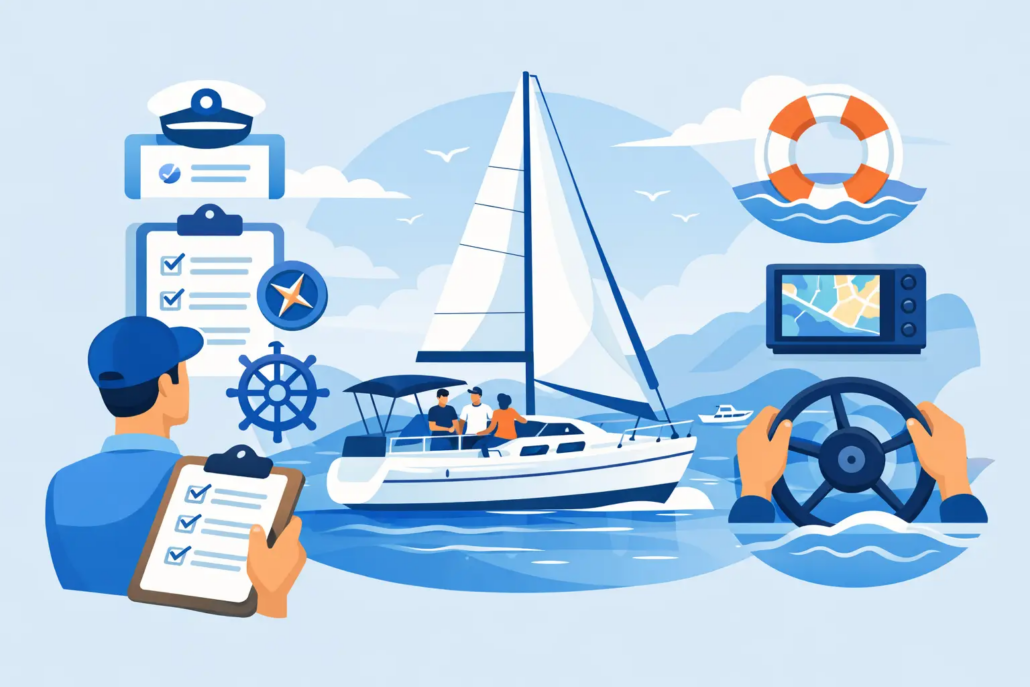
Bareboat Charter Qualifications Explained
A bareboat charter puts you in command of the yacht. You choose the route, manage the crew, read the weather, anchor for the night, and make the call when conditions change. That freedom is why bareboat charter qualifications matter. A charter company is not simply checking whether you have spent time on boats. It needs confidence that you can operate its yacht safely, independently, and within the realities of its cruising ground.
For a week among Antigua’s bays or farther through the Caribbean islands, the right preparation turns a charter from a tentative first day into the kind of trip people remember for the sailing, the anchorages, and the sense of command.
What bareboat charter qualifications really mean
There is no single worldwide license that automatically qualifies every sailor to charter every yacht. Requirements vary by charter company, country, yacht size, insurance policy, and itinerary. A catamaran in protected Caribbean waters may have different expectations from a monohull charter in the Mediterranean or a passage-focused itinerary offshore.
In practice, operators look at three things: a recognized skipper qualification, relevant practical experience, and a credible sailing resume. The qualification demonstrates structured training. Your experience shows that you have applied those skills beyond a course environment. The resume helps the charter company match your background to the boat and cruising area.
For many recreational sailors, a practical cruising certificate such as RYA Day Skipper is a strong foundation for bareboat command. It covers the skills a skipper uses every day: passage planning, pilotage, collision regulations, weather awareness, sail handling, crew management, anchoring, and close-quarters maneuvering. Depending on where you plan to charter, an equivalent national credential may also be accepted.
The key word is accepted. A certificate is valuable, but it is not a substitute for confirming the requirements of the specific charter operator before you book. Ask early, especially if you are chartering a larger yacht, sailing with limited crew, or planning to visit more exposed islands.
Bareboat charter qualifications charter companies assess
A charter company will usually ask for more than a certificate number. It may request a sailing resume that details the boats you have skippered, their length and type, locations sailed, dates, overnight passages, and your role onboard. Be accurate rather than ambitious. A concise, honest resume makes it easier for the operator to approve you or recommend the right support.
Experience that carries particular weight includes recent skippering, anchoring in varying conditions, maneuvering under power, handling a boat with twin engines or twin rudders when relevant, and navigating in the same type of waters you intend to charter. If you have only sailed small monohulls, a 45-foot sailing catamaran has different handling characteristics. If your experience is entirely daytime coastal sailing, a route with night arrivals or longer open-water legs may not be the right first independent charter.
A charter company also considers the crew. A qualified skipper still benefits from capable hands during docking, reefing, mooring, and watchkeeping. If no one else onboard has sailing experience, choose an itinerary and yacht that reflect that reality.
Certification helps, but competence decides
A qualification is not a finish line. Good skippers remain conservative when the forecast deteriorates, know when to reef early, and recognize when an unfamiliar marina or narrow approach calls for a different plan. Those decisions protect the crew, the yacht, and the trip.
This is why practical training matters. A well-run course gives you repeated opportunities to maneuver, navigate, brief crew, recover from mistakes, and make decisions under the guidance of an experienced instructor. Warm trade winds and clear water make the Caribbean an exceptional classroom, but they do not remove the need for disciplined seamanship.
At Ondeck Sailing, progression can begin with core sailing skills and continue through practical skipper training, theory, and advanced professional credentials. The useful route depends on whether your goal is a relaxed family charter, regular yacht ownership, regatta participation, or a maritime career.
Choosing the right qualification pathway
If you are new to sailing, start by learning to crew confidently before taking responsibility for a charter yacht. You should be comfortable with lines, winches, sail trim, points of sail, basic navigation, safety equipment, and life onboard. A competent crew course or equivalent hands-on experience builds that base.
The next step for many sailors is a practical skipper course paired with navigation theory. Theory is not paperwork for its own sake. It helps you plan a route, understand chart symbols and tides, calculate courses, interpret forecasts, and make sound decisions when visual clues are limited. Practical training then puts that knowledge to work on the water.
Sailors with meaningful experience may be ready for a higher-level certificate, but it is worth being realistic about the syllabus and prerequisites. Advanced credentials generally expect logged sea time, command experience, navigation knowledge, and the ability to manage more demanding conditions. Rushing ahead can leave gaps precisely where a skipper needs confidence most.
For US sailors, qualifications such as ASA certifications may be familiar and widely recognized by charter operators. RYA qualifications are internationally respected and particularly useful for sailors who expect to charter across different regions. Some destinations or operators may request a government-issued license or an International Certificate of Competence. Eligibility for an ICC depends on nationality, residency, and the issuing authority, so confirm the details rather than assuming it is available or required.
Caribbean experience is more than a postcard
The Caribbean can be wonderfully forgiving, but it is not consequence-free sailing. Trade winds can build quickly around headlands. Reefs, coral heads, mooring fields, swell, and busy charter traffic require alert navigation. In hurricane season, weather planning and flexible itineraries become even more significant.
A course or recent charter in the region gives you useful context. You learn how to read the local wind pattern, approach anchorages with a proper visual watch, protect sensitive seabed, use moorings correctly, and plan for afternoon squalls. You also gain familiarity with the rhythm of island cruising: short passages, changing customs requirements, local marine rules, and the need to arrive before daylight fades.
That regional familiarity can strengthen a charter application, but it should not be overstated. A competent skipper from another cruising ground can charter successfully in the Caribbean when their experience, qualification, and chosen itinerary are well matched.
Prepare the paperwork before your charter is confirmed
Do not wait until the final payment to find out whether your credentials meet the operator’s requirements. Send your sailing resume and certificates when you make an inquiry. Include the type of boat you want to charter, your preferred route, the dates, and whether you have previously skippered a similar vessel.
Your resume should make these points easy to see:
- The largest sailing and power vessels you have handled
- Recent trips where you acted as skipper or watch leader
- Areas sailed, including coastal, island, and offshore time
- Experience with catamarans, docking, anchoring, and mooring fields
- Qualifications held by you and any experienced crew members
If the operator identifies a gap, that does not always mean the charter is out of reach. You may be able to choose a smaller boat, adjust the itinerary, add a checkout sail, or book a professional skipper for part or all of the trip. A skipper-assisted charter can be a smart bridge between training and independent command, especially for a first catamaran charter or a new destination.
Know when to gain more experience first
The best bareboat skipper is not the person with the most impressive certificate on paper. It is the person who can lead calmly, communicate clearly, and make conservative decisions without losing the adventure of the voyage.
If you feel uncertain about docking in crosswinds, anchoring overnight, reading a chart, or managing a crew that has never sailed, take that uncertainty seriously. A few focused days of training can make a substantial difference. Then, when the lines come off in Antigua and the next island sits beyond the bow, you can enjoy the freedom you came for with the skills to use it well.

